
Your Fence Planning Checklist for Saratoga Springs (Before the Crew Shows Up)
- Emma Butcher
-
Jun 05 2026


Race season in Saratoga Springs runs like clockwork. Post time is post time—no delays, no excuses, and everyone in the grandstand knows exactly what’s happening and when. Fence installation works the same way when homeowners come prepared. The jobs that go smoothly aren’t lucky; they’re planned. The ones that hit unexpected snags—a survey dispute, a surprise HOA rule, a pool code violation discovered mid-dig—almost always could have been avoided with a little homework done up front.
This is the homework: a fence planning checklist to prepare for your Saratoga Springs fence company. Work through it before you schedule your installation date, and the actual build day becomes almost anticlimactic—in the best possible way.
Your Fence Planning Checklist for Saratoga Springs
1. Locate Your Property Survey
This is always the first step. Your fence must sit on your property, and assumptions about where that line falls have started more neighbor disputes than almost any other home improvement project. Look for your survey in your closing documents. If you can’t find it, a licensed land surveyor can locate and mark your corners before work begins.
Don’t skip this. A fence installed six inches over the line is a fence that may have to come down.
2. Mark for Underground Utilities
New York State requires utility locates before any digging begins. Call 811 (the national “Call Before You Dig” number) at least three business days before your installation date. This is non-negotiable—and your fence contractor should be asking about it, too. Gas lines and water mains don’t care how well-planned the rest of your project was.
3. Understand Saratoga Springs Zoning Rules and Setbacks
The City of Saratoga Springs has specific rules about how close a fence can be to a property line and fence height. Height limits in residential zones typically allow up to 6 feet in the rear yard and 4 feet in the front—but check before assuming. Corner lots and lots with easements have special rules. Your fence contractor should handle the permit application once you’re ready to move forward.
4. Contact Your HOA (If Applicable)
Newer developments in and around Saratoga Springs—particularly on the south and west sides of the city—are often governed by homeowners associations with their own design standards. These covenants and conditions can restrict:
- Fence height above and beyond City regulations
- Approved fence types (some prohibit chain link outright)
- Color options
- Gate placement and style
Get written approval before your installation date, not after. HOA review processes can take two to four weeks, so build that lead time into your schedule.
5. Know the Pool Fence Code
A pool fence isn’t just a good idea in New York State—it’s the law. Key requirements include:
- Minimum height: 48 inches
- Gate specifications: Self-closing and self-latching, with the latch on the pool side and out of reach of children
- No climbing features: The fence cannot have horizontal rails on the exterior that a child could use as footholds
- Ground clearance: Gaps at the base cannot exceed 4 inches
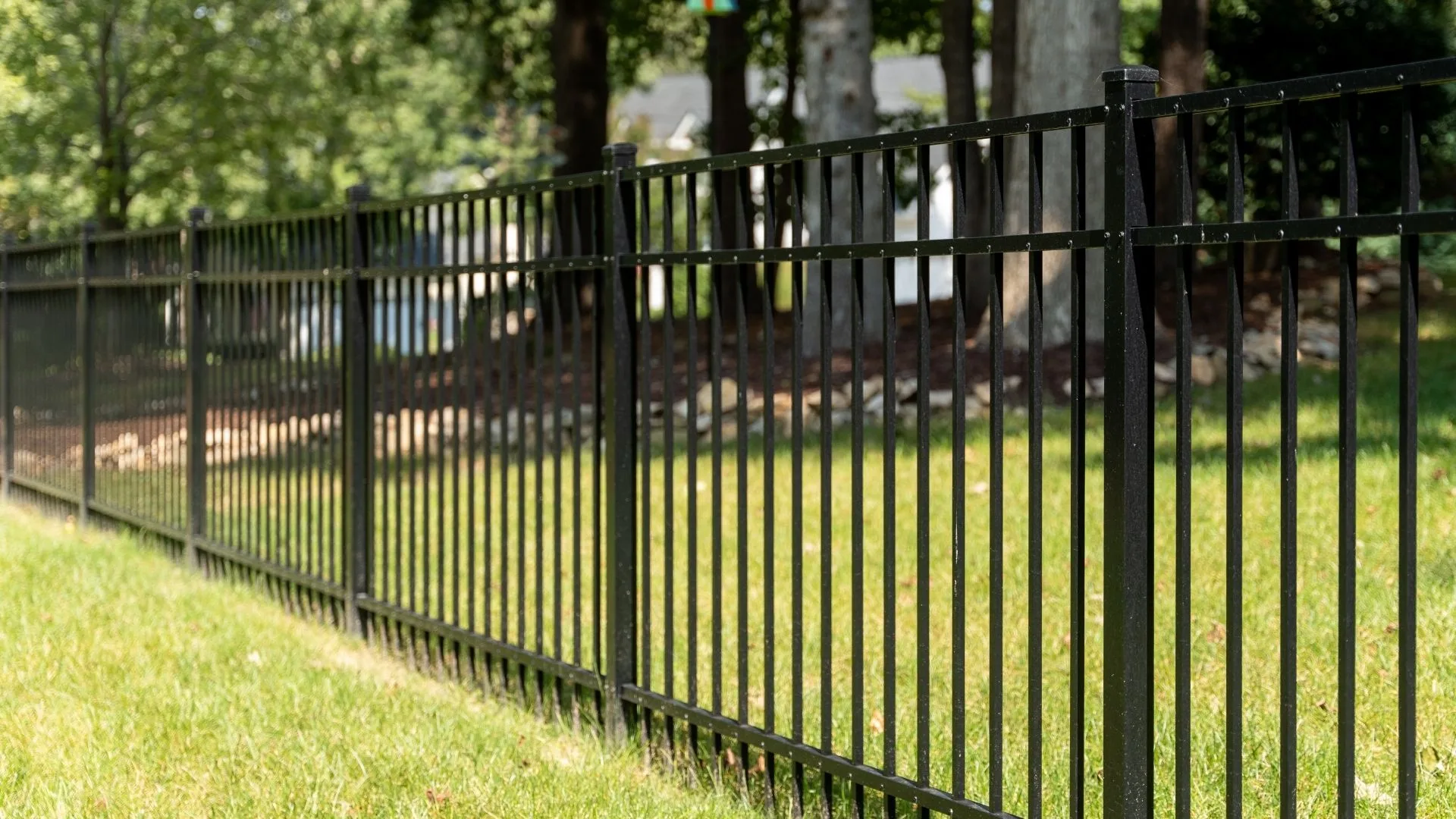
Aluminum fencing is one of the most popular pool code-compliant options because the open picket design provides clear sight lines to the water. Ask your Superior Fence & Rail rep to confirm your selected style meets current pool code before finalizing your order.
6. Account for Your Landscaping
Walk your fence line before the crew arrives and note:
- Mature trees near the fence line. Roots can make post holes significantly more difficult—and expensive—to dig. Knowing in advance lets the installation team bring the right equipment.
- Grade changes. Sloped lots require a raked or stepped fence design. A flat panel fence dropped onto a hillside leaves gaps at the base that look unfinished and invite escape attempts from pets.
- Irrigation systems. Sprinkler heads near the fence line can be damaged during installation if the crew doesn’t know they’re there.
7. Decide on Access Gate Placement Before—Not During—Installation
Gate location affects the entire fence layout. Think through access points before installation day, because moving a gate mid-project adds cost and time. Consider where you need to move a lawnmower in and out, where garbage bins access the curb, and whether you need a double-wide opening for vehicle access. If there’s a pool, code mandates the gate latch from the pool side—that affects placement, too.
Who Should I Call When I’m Ready for Fence Installation in Saratoga?
You’ve asked what you need before your fence installation in Saratoga, and you have the answers. Every item on this fence planning checklist has a reason behind it, and skipping any one of them can stall a project or create a problem after the fact. The good news is that a professional contractor handles most of this alongside you. Superior Fence & Rail of Albany manages permit applications, assists with HOA paperwork, and walks every property before installation to assess the site conditions and plan for success. What you need before fence installation in Saratoga is a complete picture of your property—and a contractor who knows what to do with it. Request a free estimate and Superior Fence & Rail will make sure nothing on this checklist gets missed.
About Emma
Emma Butcher is a content writing professional at Urbain Marketing. She specializes in writing content for fence companies and fence installation in local markets.
Get A Fence Quote Today!
Great Fences Make Great Neighbors!
- Best Quality Fences
- Highest Customer Satisfaction Rating
- Fence Financing Options
- Licensed, Bonded & Insured
Your Superior Fence and Rail service team is standing by! Get a fence installation quote today!