
5 Questions to Ask Before You Hire a Huntersville Fence Company This Storm Season
- Emma Butcher
-
Aug 06 2026


Answer these five questions about your own yard first. Then you’ll know exactly how to prepare for the next storm season.
When was the last time you thought about your fence? If you’re like me, you probably don’t remember it’s there unless you find it face-down in the azaleas. That’s just how it goes. It’s out of mind, until one August afternoon a line of storms rolls in off the lake and suddenly you’re standing at the sliding door watching a panel you paid good money for do cartwheels toward the neighbor’s patio. The right time to choose a Huntersville fence company is before that afternoon, not the week after, when every fence crew in Mecklenburg County is booked solid and you’re calling for space on a wait list.
So before you start comparing contractors, run your own yard through this short self-check. Five questions. Be honest with your answers, because they tell you exactly what your fence needs to survive around here, and exactly what to make a contractor prove before you sign anything.
Question 1: How Close Are You to the Water?
Here’s the thing people forget about living near Lake Norman. Open water doesn’t slow wind down, it lets it build. A gust loses steam crossing miles of inland tree cover. The same wind arrives at a lakeside backyard with most of its energy still intact. The closer your lot sits to that open fetch, the harder your fence works on a bad day.
You don’t need a dock to feel it, either. Neighborhoods a few minutes off the water still catch more wind than the inland Charlotte suburbs, because the whole northern Mecklenburg corridor sits in that lake-influenced pocket. A good Huntersville fence company knows the difference between a sheltered interior lot and one that takes the brunt—and builds accordingly. If a contractor quotes your exposed lakeside yard the exact same spec they’d use for a protected cul-de-sac three neighborhoods over, pay attention.
Question 2: How Deep Was Your Fence Really Installed?
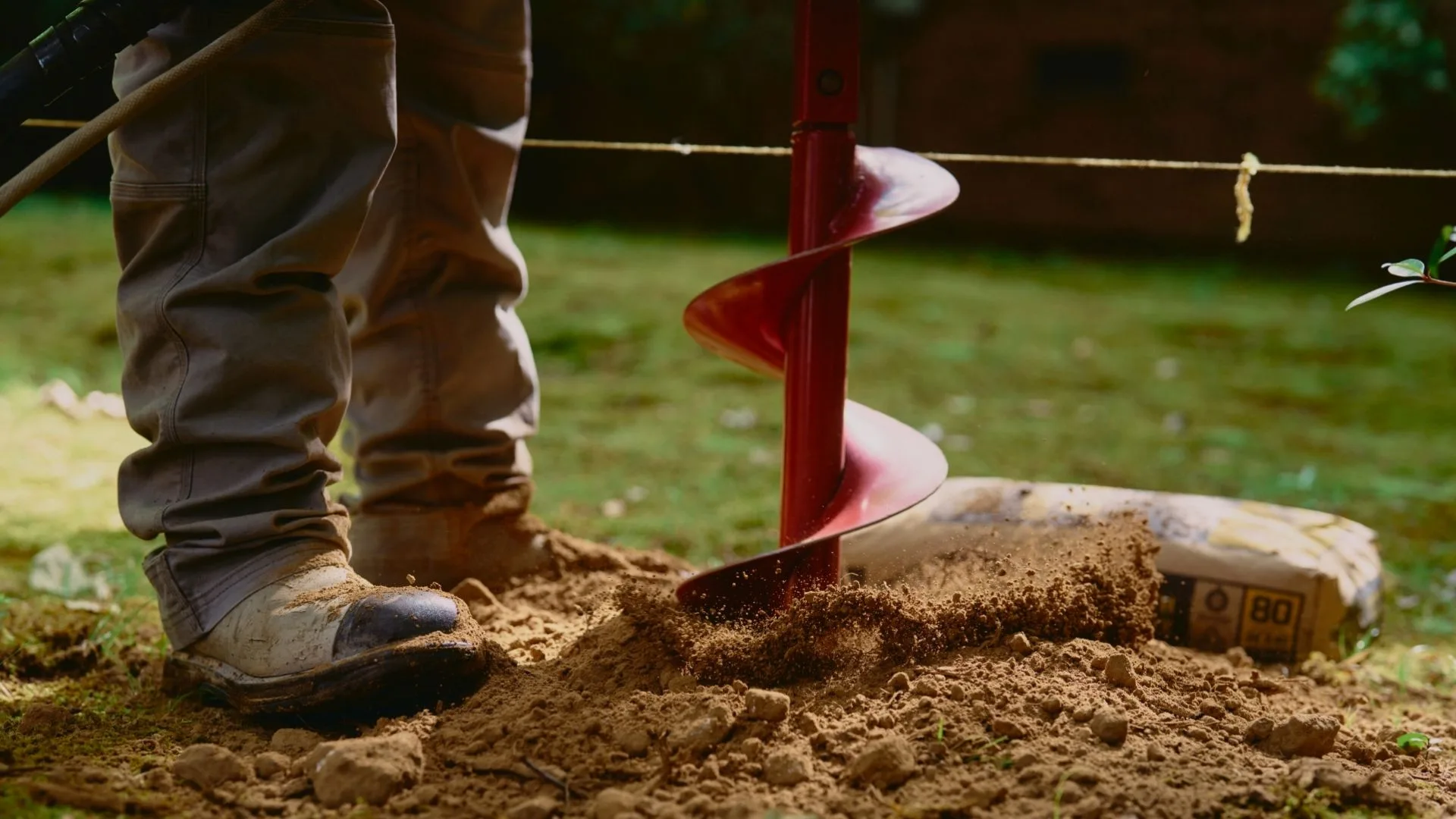
Most people don’t know. Why would you? But post depth is the single biggest predictor of whether a fence stays standing in a wind event, and it’s the easiest corner for a rushed crew to cut. Once the concrete’s poured it’s out of sight, out of mind.
A fence fails at the ground before it fails anywhere else. The panels can be bombproof, but if the posts weren’t set deep enough or anchored right, the whole line levers over in one piece like a gate somebody left unlatched.
Fifteen miles up the road, Joe Gibbs Racing spends its days worrying about exactly one thing: what air does to a body moving through it. Wind is just air with somewhere to be, and it treats a fence like a race team treats a rival—always looking for the gap, the weak seam, the panel that wasn’t locked down. The contractor’s job is to leave it nothing to grab. That starts underground, with posts set in concrete at a real depth, not eyeballed to save twenty minutes.
When you talk to a contractor, ask flat out:
- How deep do you set your posts, and do you anchor them in concrete?
- Does that depth change for my more exposed sections?
- What happens if you hit hard clay or an old root system mid-dig?
The right answers are specific. The wrong answer is a shrug and a change of subject.
Question 3: What’s Your Fence Actually Made Of?
Not every fence type meets a storm the same way, and the real truth is that the material matters less than how it’s built and anchored. That said, if wind is your main worry, some choices give you a head start.
Vinyl fence gets a bad rap from the flimsy big-box stuff that turns brittle and pops apart in the first real blow. Professional-grade vinyl is a different animal. Superior Fence & Rail fabricates its own vinyl from 100% virgin material, engineered specifically for high-velocity wind zones, with panels that lock together instead of relying on a couple of tabs and hope. It’s the kind of thing you don’t appreciate until the morning you walk the property line after a storm and everything’s still standing.
Wood fences, whether pressure-treated pine or cedar, handle wind well when they’re stick-built on site rather than slapped up from pre-made panels. Superior builds theirs one board at a time and sets every post in concrete, to a standard that exceeds the Miami-Dade wind code. That’s a hurricane-coast benchmark doing the same duty on an inland Piedmont fence, which is exactly the kind of overbuilding you want when the remnants of a Gulf storm come calling. A shadowbox style, with its small gaps between boards, also lets wind slip through instead of catching the fence like a sail.
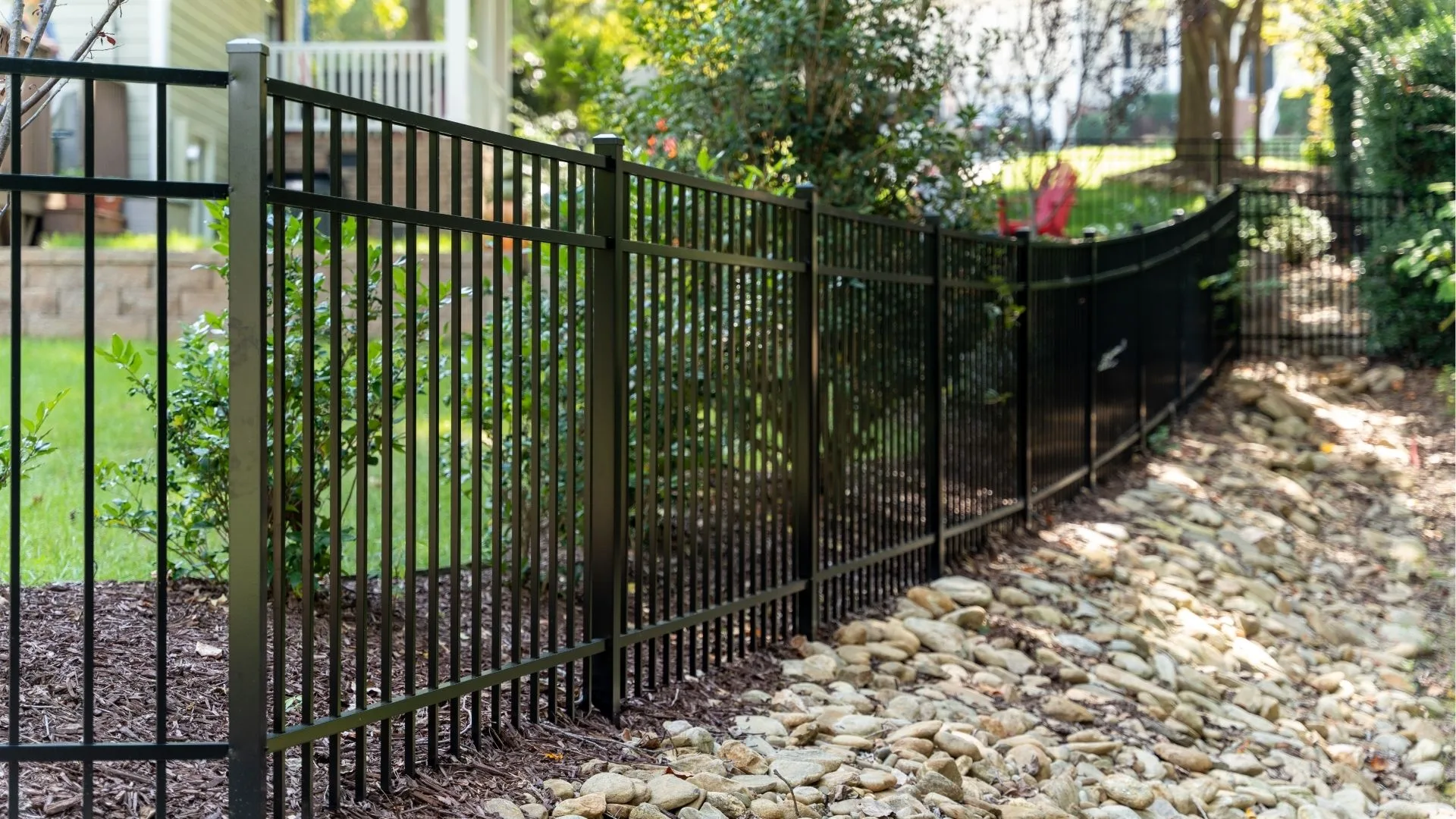
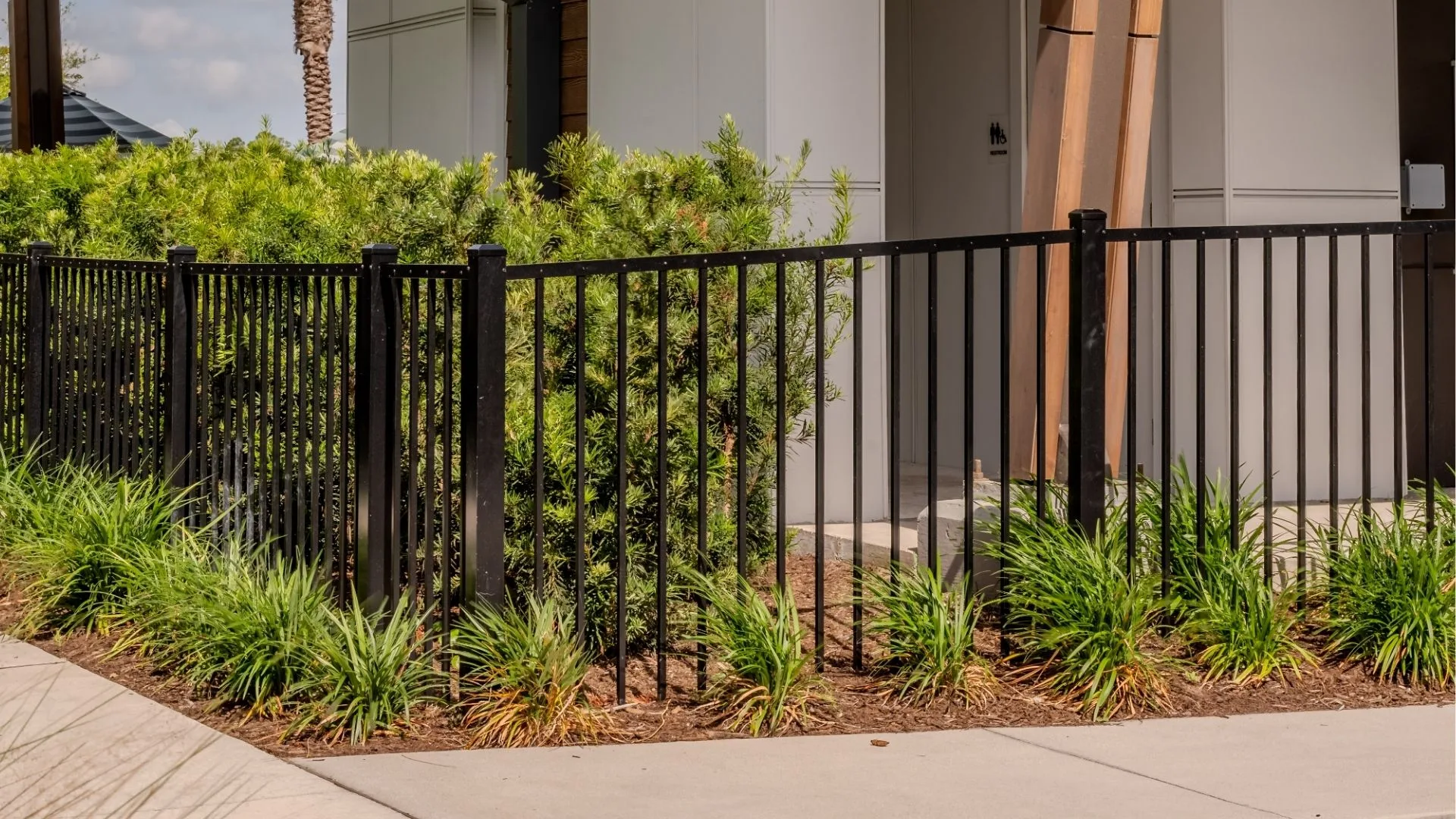
Aluminum fence barely argues with wind at all, because there’s so little for a gust to push against. If your worry is more about a rescue dog bolting during a thunderstorm than about the fence itself blowing over, an aluminum line gives you security and a view of the lake at the same time.
If you’re still weighing options, it’s smart to look at the full range of fence types before you narrow down, because the right pick depends on your lot, your exposure, and what you actually need the fence to do.
Question 4: How Old Is the Fence You’ve Got Now?
If you’re reading this because the fence already looks tired, that’s important to take note of. Wind damage is rarely the first blow. It’s the last one. A post that’s leaning more every year, a rail that’s pulled a little further from its bracket every humid summer, a gate that won’t close without some extra help. The storm doesn’t create the weakness. It finds the one that’s already there.
This is where a straight repair-versus-replace conversation matters, and where you want a contractor who’ll tell you the truth even when the truth is the cheaper option. If yours has another decade in it, a good crew says so. If it’s living on borrowed time and the next real storm is going to finish it, you’d rather hear that in the spring than after hurricane season.
Question 5: Can the Company Prove It’ll Still Be Here Next Year?
This isn’t the first question anyone thinks of, but it might be the most important. Storm season has a way of flushing out fly-by-night operations. The crew that shows up with the too-good-to-be-true price in June can be impossible to reach by the time a warranty question comes up in October.
A real Huntersville fence builder gives you a few things a fly-by-nighter can’t:
- Two separate warranties, in writing. One on the product, one on the workmanship, so you know exactly who stands behind what. Superior backs its installs with a workmanship warranty and offers lifetime transferable coverage on several fence types, which means the fence becomes an asset that follows the house if you sell.
- Real insurance. General liability, commercial auto, and workers’ comp. If a crew member gets hurt on an uninsured job in your yard, the property owner can end up holding that bill.
- Financing that signals staying power. A company confident enough to offer real fence financing, sometimes with no-interest plans if you qualify, is a company that plans on being around when the payments are. An outfit that only takes a check today may not be reachable tomorrow.
None of that shows up in the lowest bid. All of it shows up the morning after a storm, when you find out whether you hired a company or just rented a crew.
Find the Right Huntersville Fence Company Before the Storm Hits
Storm season isn’t a maybe in northern Mecklenburg. The August 2023 tornado that touched down near Beatties Ford Road and the remnants of Helene that knocked out power to tens of thousands of Duke Energy customers across the county are recent enough that most homeowners remember exactly where they were. The fence you choose now is the one that meets the next one.
You’ve answered the five questions. You know your exposure, your posts, your material, your fence’s age, and what a company should be able to prove. That’s more than most people know walking into this, and it’s enough to tell a real contractor from a risky one. Take your time, ask the hard questions, and explore your options with a Huntersville fence company built to stand through what the lake sends its way. When you’re ready to talk specifics, reach out to Superior Fence & Rail of Charlotte and start the conversation before the sky does.
About Emma
Emma Butcher is a content writing professional at Urbain Marketing. She specializes in writing content for fence companies and fence installation in local markets.
Get A Fence Quote Today!
Great Fences Make Great Neighbors!
- Best Quality Fences
- Highest Customer Satisfaction Rating
- Fence Financing Options
- Licensed, Bonded & Insured
Your Superior Fence and Rail service team is standing by! Get a fence installation quote today!