

Choosing a Historic District Fence for Your New Bern, NC Home
- Emma Butcher
-
Jul 05 2026


Walk a single block of Pollock Street in New Bern and you’ll pass houses from four different centuries. A Federal townhouse that went up before the War of 1812. A Victorian cottage that was new when the first telephone lines were being strung down the street. A Colonial Revival bungalow from the 1920s sitting comfortably next to something older than the state itself. More than 164 sites in this city of roughly thirty thousand people appear on the National Register of Historic Places. That’s a point of local pride, and if you’re an owner of a historic home in New Bern, a reason to keep reading.
If it’s the fence: the same commitment to preservation that keeps New Bern’s streets looking the way they look is also why a historic district fence in New Bern, NC has to be reviewed by the Historic Preservation Commission before a post goes in the ground. The historic guidelines are specific, covering everything from material to picket spacing. Finding the best fence for a historic home here means answering two questions at once: which fence fits the house, and which fence satisfies the guidelines. The answer to both questions starts with knowing what century your house belongs to.
This guide matches New Bern’s four major residential eras to the fence choices that complement them—whether you’re submitting to the HPC, responding to an HOA, or just trying to make the right call for a house with some history to it.
Historic Review: What the HPC Is Looking For
One thing worth naming before the era guide: if your property is in the Downtown or Riverside historic districts, any fence installation requires a Certificate of Appropriateness from the Historic Preservation Commission before work begins. For most residential fences built along the lines described below, that’s a minor works review—not a full public hearing. If you’re not sure which district applies to your address, New Bern’s Development Services office can tell you quickly.
For everyone else with a historic or historic-styled home in the greater New Bern area: the right New Bern historic district fence for a Federal-period house is the right fence whether or not the HPC has anything to say about it. The aesthetic logic doesn’t change based on the district boundary.
Historic District Fences in New Bern, NC: Let the Architecture Lead
New Bern’s four major residential eras each have a visual identity that’s legible once you know what to look for. The right fence complements the architecture, not fights it.
Colonial and Federal Period Homes (c. 1710–1840)
The oldest homes in New Bern’s Downtown district are all about taste and restraint. Federal-style brick townhouses, Georgian side-hall plans, gambrel-roofed Colonial residences: these are houses built by people who understood that elegance doesn’t need to announce itself. The proportions are carefully considered. The details are purposeful. No ornamentation for its own sake.
A fence in front of a Colonial or Federal home has to operate the same way. Anything fussy or decorative will fight the house, and the house will win.
Wood: A painted square-picket wood fence is the most period-grounded choice here. No decorative tops, no elaborate gate hardware, no elements borrowed from a different century. Superior Fence & Rail has wood picket options that fit this purpose perfectly, and pressure-treated lumber handles Craven County’s humidity without the constant maintenance cycles that plague lower-grade stock.
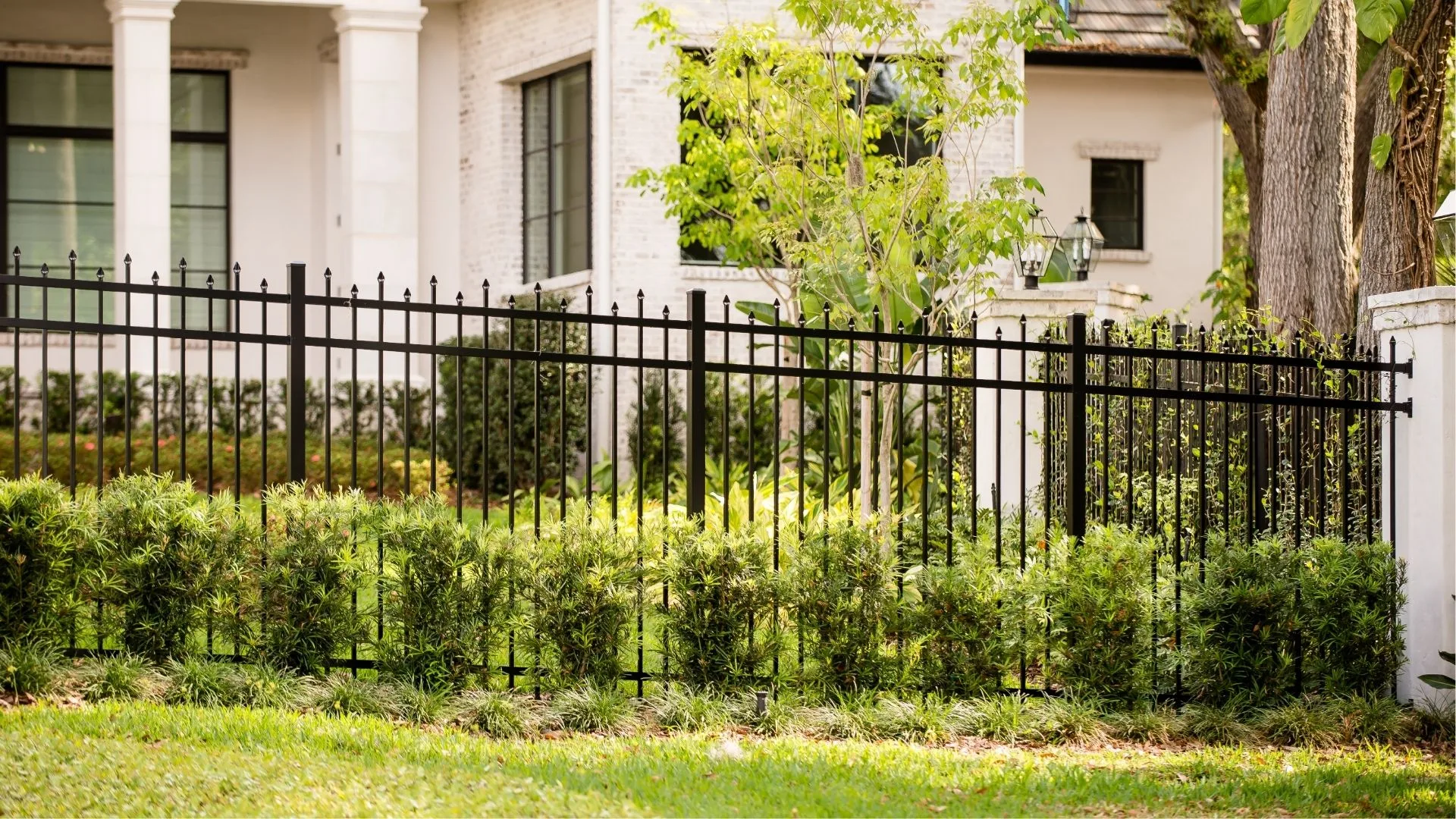
Aluminum: A flat-top or simple spear-top aluminum fence in black or dark bronze reads as a refined wrought iron substitute—an accurate profile to the early 19th century designs and considerably less demanding than the real thing.
Greek Revival and Antebellum Homes (c. 1830–1865)
A step up in ambition from the Federal period. Greek Revival homes wear their prosperity openly—full-height columns, temple-front porticos, a formal symmetry that’s designed to be seen from the street. Fences and gates from this period framed the approach to the door and had to compliment the grandeur of what was behind them.
Wood: Gothic-top or pointed pickets at four feet tall match the grander scale of a Greek Revival home without overwhelming it. Masonry and brickwork were a feature in many historic wooden fences from this period, but aren’t needed to feel authentic. Painted white to match the trim, a Greek Revival wood fence looks the way the house intends.
Aluminum: Spear-top aluminum with post finials answers the formality of this era in a way that flat-top profiles don’t quite hit. Superior Fence & Rail’s customizable profile and post cap options let you match the fence’s details to specific architectural features of the home.
Victorian and Italianate Homes (c. 1865–1910)
New Bern’s late 19th-century homes don’t do anything halfway. Asymmetrical rooflines, bay windows, decorative bargeboards, wraparound porches with turned spindles and carved brackets—the Victorian and Italianate houses in the Downtown district were built by homeowners who wanted the street to know they lived there. The fence, in this era, is part of the statement.
Cast iron fencing was the prestige material of the Victorian age: ornate, visually complex, and present on the best streets in every prosperous American city. Most of it eventually rusted. What’s replaced it—and what reads most authentically in front of a Victorian or Italianate home—is ornamental aluminum.
Aluminum: Scroll inserts, ring accents, alternating spear heights, finials at the posts—these aren’t excessive for a Victorian home. They’re historically accurate. The cast iron fencing that lined the fashionable streets of the 1880s looked like this, and ornamental aluminum from Superior Fence & Rail is what that vocabulary looks like in a material that won’t need repainting every few years. The HPC guidelines encourage fence designs that relate to the principal structure, and for this era, leaning into the ornamentation is the right call.
Wood: A wooden fence can work here, as well. More decorative picket styles painted in a period-appropriate palette harmonize with the elaborate architecture, or could be paired with aluminum fencing for a front yard/side yard contrast.
Trying to figure out which fence style is the right match for your home’s era? Superior Fence & Rail of Eastern NC works with historic-district homeowners throughout the area. Browse our fence types on our website, or get in touch to start the conversation.
Colonial Revival and Craftsman Homes (c. 1910–1945)
The Riverside Historic District has a feel all of its own. Located on former farmland north of downtown and built for working families and tradespeople, Riverside is streets of Craftsman bungalows, Colonial Revival cottages, and the occasional Prairie Style outlier. These homes have a settled, unhurried quality that the grander properties downtown don’t quite match.
Fences here should feel like they belong to the block.
Wood: Board-on-board privacy fencing suits Riverside backyards in character and scale. In the front yard, a simple wood picket—painted or stained to complement the trim—works with a Craftsman bungalow without overstating the property.
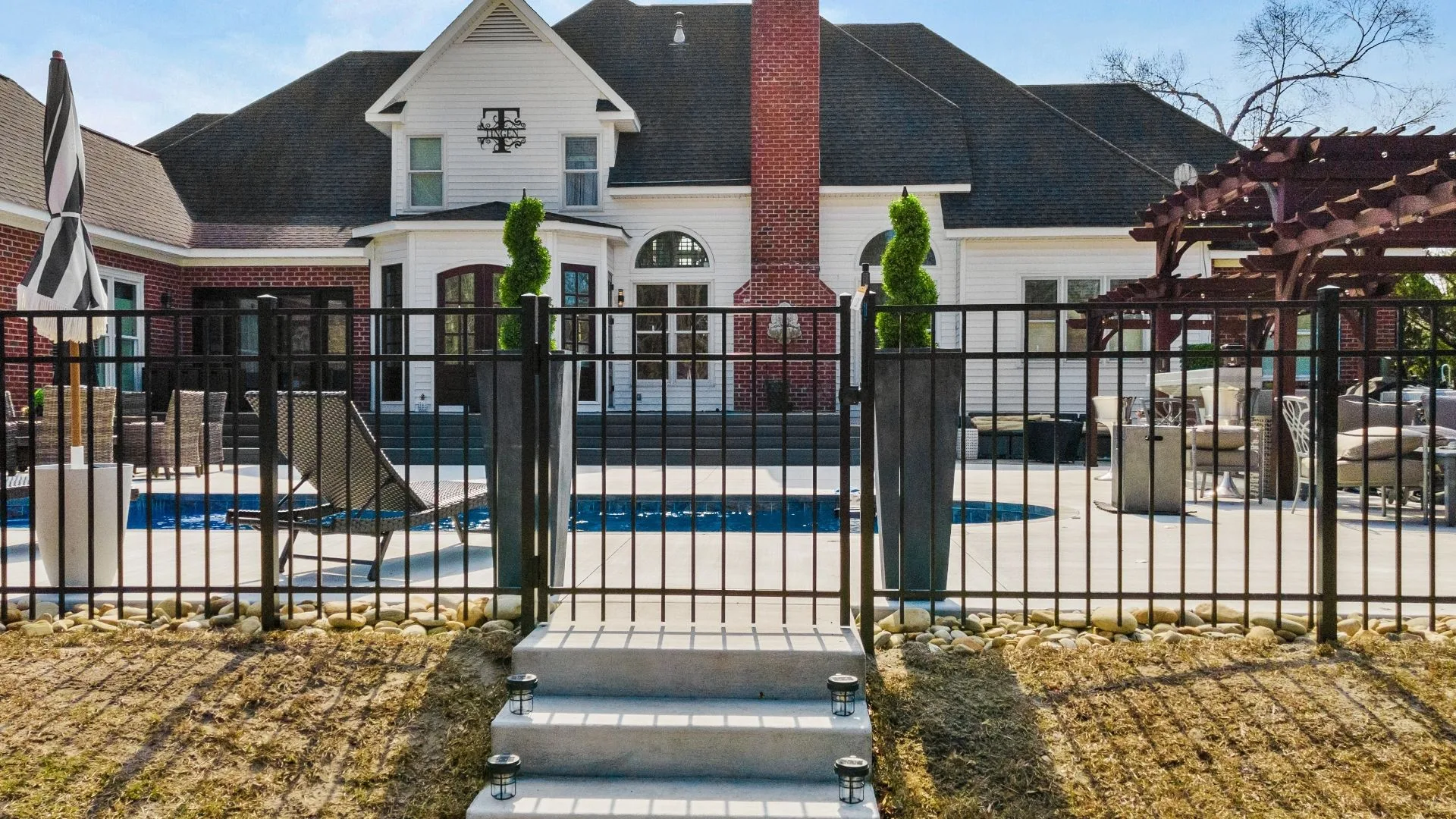
Aluminum: It’s not as common as a wooden fence, but clean-line aluminum picket can also work with Colonial Revival and Craftsman homes. No ornamental scrollwork, just a simple flat-top or picket to go with a black or dark bronze powder coat.
Not in a Historic District? Your HOA Is Asking the Same Question
The Historic Preservation Commission’s fence guidelines aren’t arbitrary. The Commission is making an aesthetic and researched judgment about fit: does this fence belong to this house, on this street, in this neighborhood?
Your HOA is making the exact same judgment. The language is different (“architecturally consistent with surrounding properties,” “compatible with the neighborhood character”) but the question underneath it is the same. A picket fence that the HPC would approve in front of a Federal-period home is the same picket fence your HOA had in mind when they wrote those covenants. An ornamental aluminum fence that fits a Victorian house will satisfy a neighborhood association with opinions about curb appeal—because it actually fits.
The best fence for a historic home—or a home with historic character—is the one the house is already asking for. Everything else follows from that.
Superior Fence & Rail of Eastern NC can help you find that fence, navigate whatever approval process applies to you, and get it installed right. Contact us for a free estimate to get started.
About Emma
Emma Butcher is a content writing professional at Urbain Marketing. She specializes in writing content for fence companies and fence installation in local markets.
Get A Fence Quote Today!
Great Fences Make Great Neighbors!
- Best Quality Fences
- Highest Customer Satisfaction Rating
- Fence Financing Options
- Licensed, Bonded & Insured
Your Superior Fence and Rail service team is standing by! Get a fence installation quote today!