
After the Storm: When to Repair and When to Replace Your West Palm Beach Fence
- Emma Butcher
-
Jun 24 2026


Branches in the pool, a patio chair wedged in the neighbor’s hibiscus, and your fence doing something it definitely wasn’t doing yesterday—that’s a pretty standard morning in West Palm Beach after a summer storm blows through. Before you start pulling on things or calling the first number that pops up on a neighborhood Facebook group, grab a cup of coffee and take a walk along your fence line. What you find out there will tell you whether you’re looking at a fence repair in West Palm Beach or a full replacement, and the difference between those two answers can save you serious money—or cost you serious money—depending on who you listen to.
How to Assess Repairing a Fence in West Palm Beach After a Storm
Start at the gate. It’s the weakest structural point on most residential fences, and it’s the first place storm damage announces itself. Try the latch. Open and close it. If the gate swings and latches the way it did last week, that’s a good sign for the rest of the line. If it’s binding, dragging, or won’t latch at all, the posts on either side have probably shifted—and post damage is where “quick fix” starts becoming a longer conversation.
Now walk the rest. Go slow. You’re looking for three things:
- Posts: Are they plumb, or leaning? Push on them. A post that rocks in the ground means the concrete footing has cracked or the post has snapped below grade. Everything attached to that post is compromised.
- Rails and panels: Still connected? A rail that popped loose but isn’t broken can usually be reattached. A rail that’s cracked, split, or bent past straight needs to be replaced.
- The full run: Step back and sight down the whole line. A fence that’s waving or sagging across multiple sections has more than one failure point, and patching four spots on a fifteen-year-old fence starts to become a different kind of math.
Chain Link Fence After a Storm: Bent Doesn’t Always Mean Broken
Chain link is one of the more forgiving fence types in high wind. The mesh flexes and absorbs load instead of catching it like a sail, which is why you’ll sometimes see chain link still standing when the solid privacy fence next door is in three pieces across the lawn.
When chain link does fail, though, it’s the posts and top rail—the structural frame—that go. Stretched mesh can sometimes be re-tensioned and reattached to straightened posts. But if the posts themselves are bent at ground level or the top rail is crimped in multiple spots, you’re rebuilding the frame while reusing old mesh, which is the most expensive way to end up with a fence…that still looks like it went through a storm.
When chain link repair makes sense:
- Mesh is intact but loose or detached from one or two posts
- A single post is leaning but hasn’t snapped below grade
- Gate hardware is damaged but the gate frame is still square
When replacement is the smarter move:
- Multiple posts are bent or uprooted
- Top rail is crimped or twisted across a full section
- The fence was already corroding before the storm gave it a reason to quit
Not sure which side of that line yours falls on? Contact Superior Fence & Rail for an assessment—no pressure, just an honest look at what you’re working with.
Wood Fencing: The Damage You Can See and the Damage You Can’t
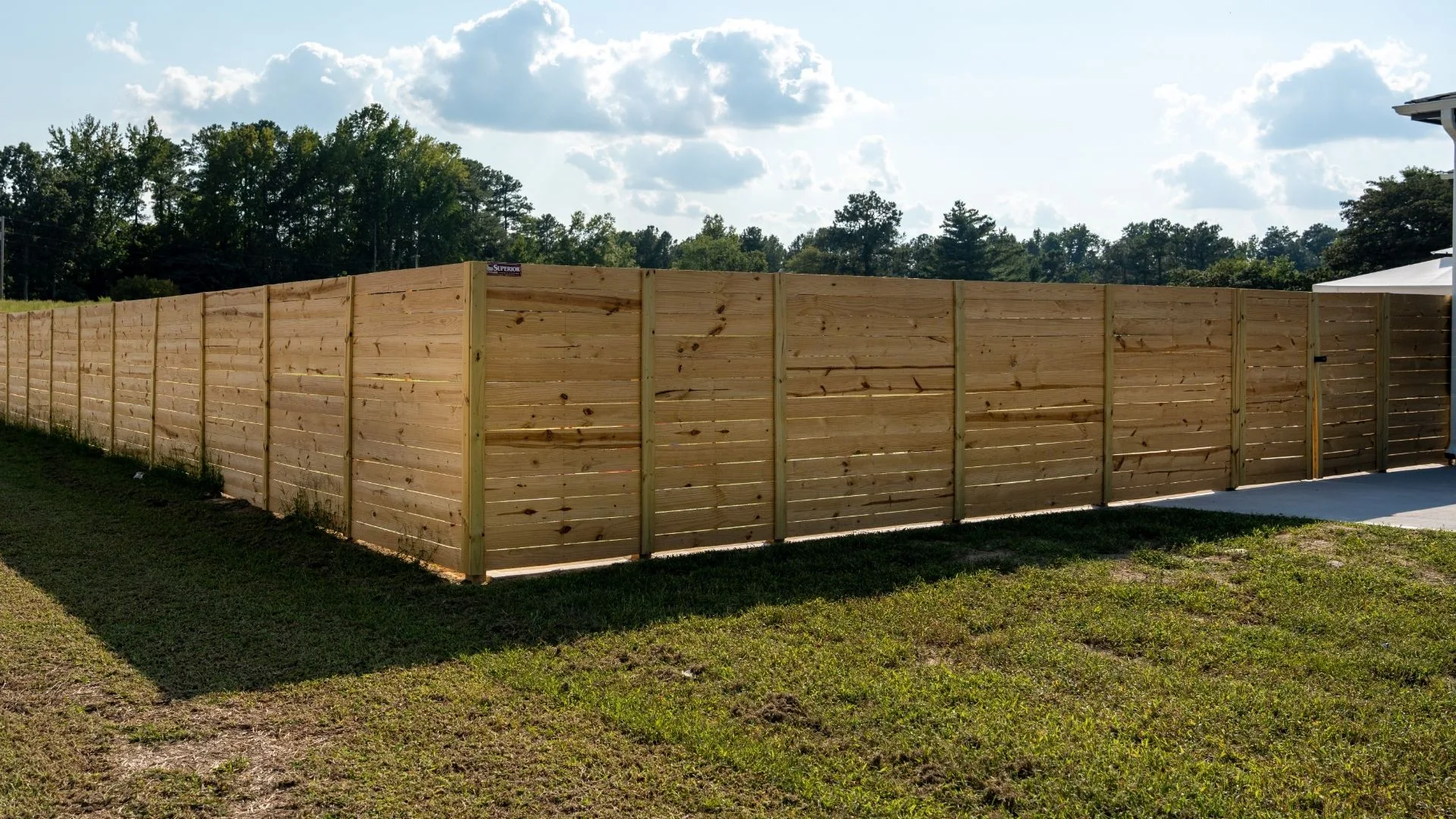
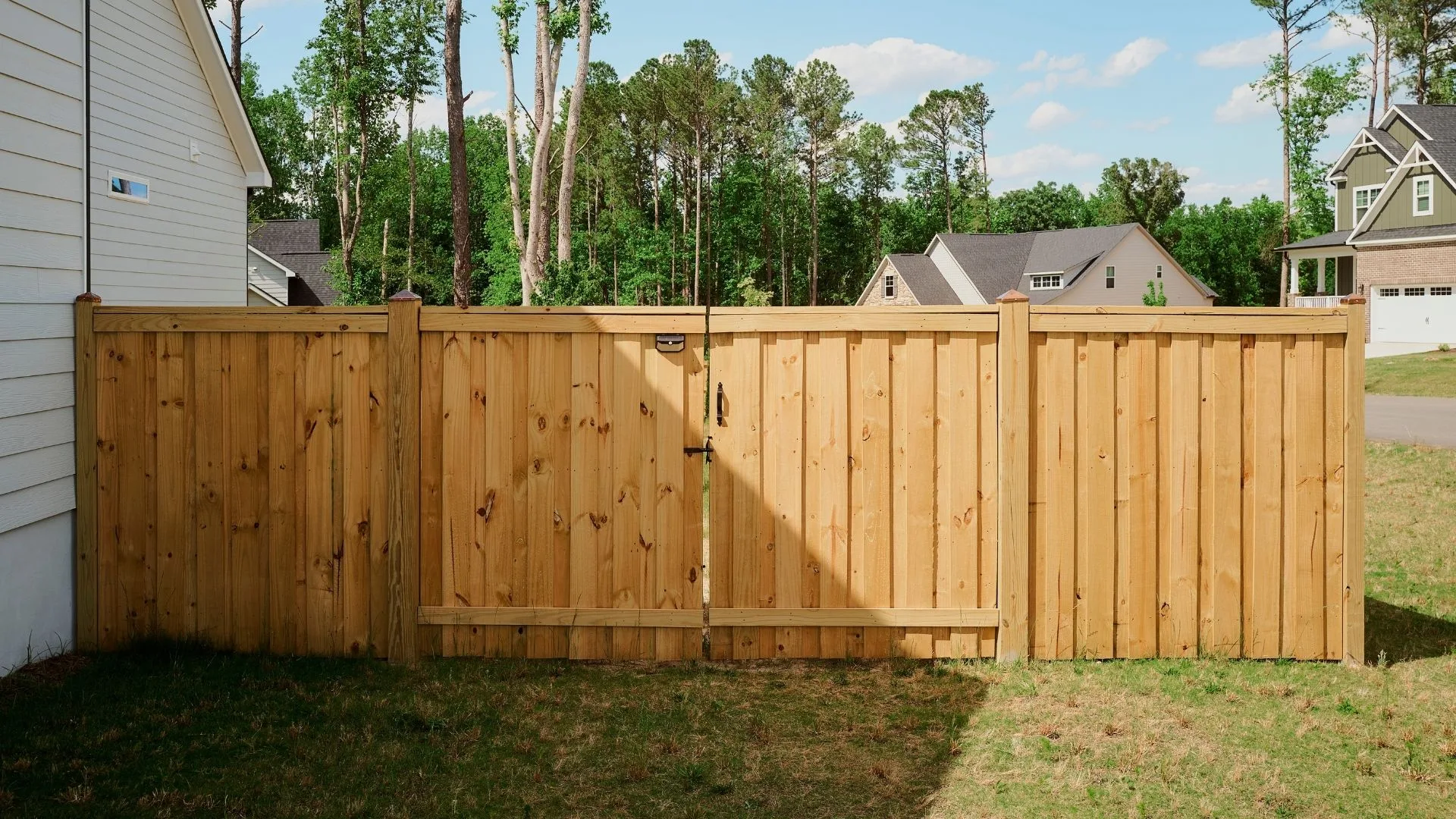
Wood fences and South Florida storms have a long, complicated history. A properly built wood fence—posts set deep in concrete, heavy-gauge galvanized fasteners, quality lumber—handles serious wind. Wood that’s been quietly weakened by years of humidity and insect activity folds under gusts that a newer fence barely registers.
Here’s what makes wood tricky after a storm: the visible damage isn’t always the real damage. A blown-off panel looks dramatic, but if the posts behind it are solid and plumb, that’s a straightforward repair—new pickets, reattach, move on with your day. The problem you can’t see from the yard is a post that looks fine above grade but has rotted or snapped beneath it. Push on the post. If it moves like a loose tooth, the storm didn’t cause that—it just made it your problem today.
A rough guide to wood fence triage:
- One panel down, posts solid: Repair. A competent crew can match lumber and rebuild a section without tearing out the whole run.
- Posts soft or shifting at the base: That rot predates the storm. Replacing a single post means pulling fence off on both sides, digging out the old footing, and resetting. When three or four posts are compromised, a full replacement gives you a uniformly sound fence instead of a patchwork that ages at two different speeds.
- The fence was leaning before hurricane season started: You already knew. The storm just moved up the timeline.
Curious whether your wood fence is worth saving? Take a look at Superior Fence & Rail’s wood fencing options to see what a purpose-built replacement is designed to handle in this climate.
Vinyl Fence After a Storm: Should I Replace My Fence or Repair It?
The question most vinyl fence owners ask after a storm—should I replace my fence after storm damage, or is repair enough—has a surprisingly straightforward answer, because vinyl sorts itself into clean categories.
Quality vinyl fencing (100% virgin vinyl with UV inhibitors and reinforced rails) is engineered to flex in high wind and return to form. The vinyl panels from the Saturday morning big-box run are a different product wearing the same name.
- Cracked or shattered panels: Vinyl doesn’t bend and recover the way metal does. When it fails, it breaks. A cracked panel can’t be patched—it has to be swapped. The upside is that panel replacement on vinyl is one of the simpler fence repairs, as long as the posts and rails underneath are still solid.
- Posts leaning or pulled from footings: Same as every other material. If the posts are gone, the panels above them are irrelevant.
One thing worth knowing before you start collecting quotes: Superior Fence & Rail’s vinyl comes with a transferable lifetime warranty. If your fence was installed by Superior, storm damage to a panel may already be covered—and that’s worth a phone call before you hire whoever’s running storm-chasing repair ads on Nextdoor this week.
The Honest Math on Patching vs. Starting Over
Most homeowners want the fastest, cheapest fix after a storm—understandable when you’re also dealing with downed tree limbs, a torn pool screen, and whatever happened to the lanai furniture. But fence repair in West Palm Beach has a tipping point, and it’s worth knowing where it is.
When you’re replacing more than roughly a third of a fence—posts, panels, rails, some combination—you’re approaching the cost of a new installation while ending up with something that’s half old and half new. It won’t match. It won’t weather at the same rate. And the older sections are just waiting for next season’s first named storm to finish what this one started.
A new fence comes with current materials, current wind and corrosion ratings, and warranties that mean something when (not if) the next one rolls through. You’d rather spend your next Saturday morning at Grandview Public Market than standing in the yard pushing on fence posts again. Superior Fence & Rail of Palm Beach handles fence repair and full replacements in West Palm Beach and across Palm Beach County—free estimates, honest assessments, and no surprises.
About Emma
Emma Butcher is a content writing professional at Urbain Marketing. She specializes in writing content for fence companies and fence installation in local markets.
Get A Fence Quote Today!
Great Fences Make Great Neighbors!
- Best Quality Fences
- Highest Customer Satisfaction Rating
- Fence Financing Options
- Licensed, Bonded & Insured
Your Superior Fence and Rail service team is standing by! Get a fence installation quote today!