
5 Things a Sloped Olathe Yard Will Do to Your Fence
- Emma Butcher
-
Jul 15 2026


Most people picture a new fence as one continuous, level line—same height front to back, same look as the showroom sample. Somewhere between that picture and the actual dirt in your backyard, Olathe’s real topography gets a say in the matter, and it doesn’t ask permission first. Between the creek corridors on the north side of town and the newer subdivisions carved out of old farmland, flat lots are the exception here more than the rule, which means a sloped yard fence in Olathe needs a work plan from the first stake in the ground, not a plan-B once the crew is standing in your yard with a level and a shrug.
The good news: none of this is a mystery. Every slope, drop-off, and low spot here has a known solution. Here’s what your slope is already doing to your yard, whether you’ve thought about it yet or not.
Why a Sloped Yard Fence in Olathe Needs a Different Plan
A flat lot forgives a lot of small mistakes. A sloped one doesn’t. The same grade changes that make Cedar Creek’s wooded lots and the bluffs above Kill Creek genuinely nice to look at are exactly why a standard flat-ground install plan falls apart on your actual property. Get it wrong and you’ll see it—gaps at the bottom, a fence sliding downhill, a gate that swings open on its own. Get it right, and the fence just works.
1. The Gap That Opens When a Racked Fence is Installed Wrong
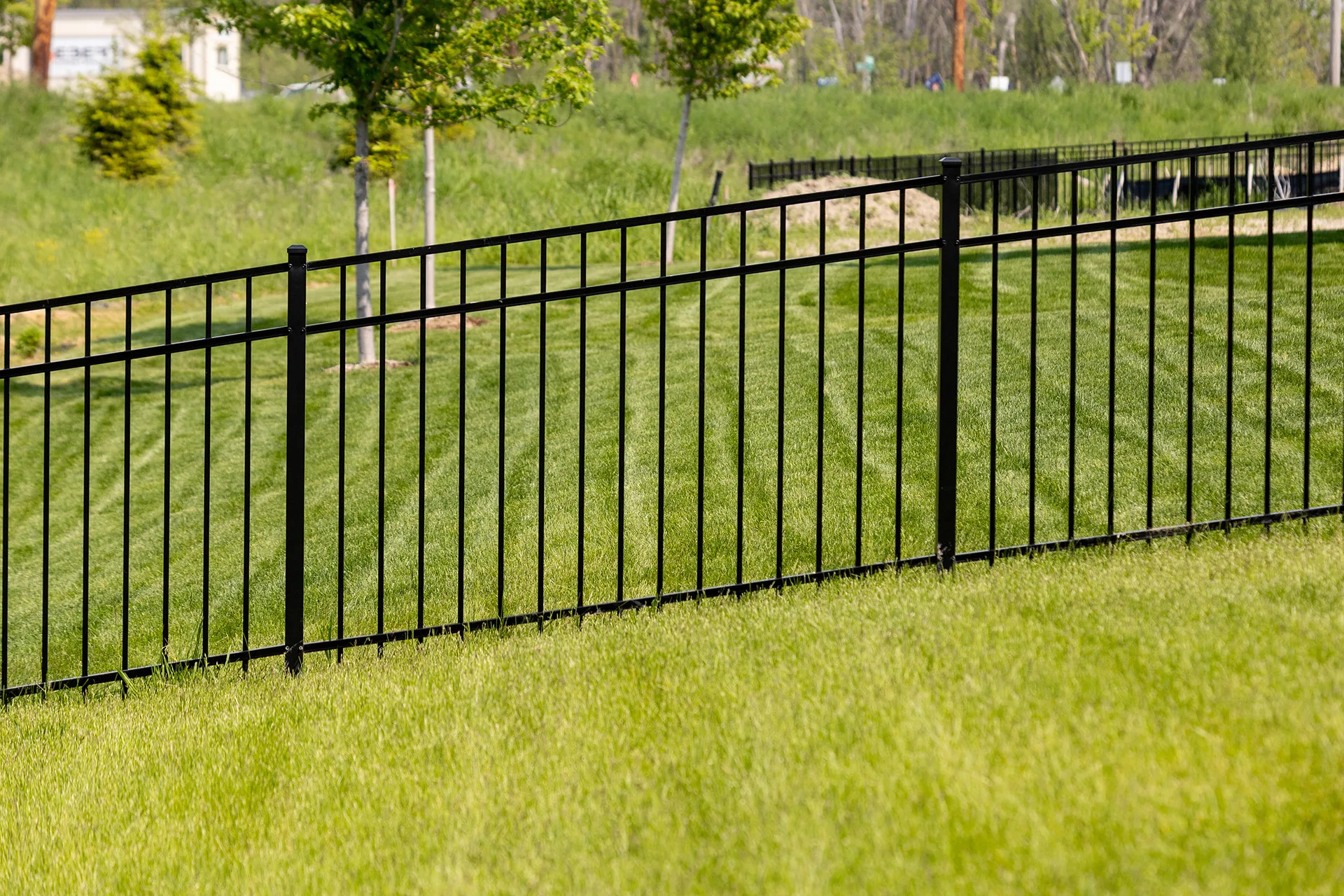
Racking is the technique where the posts stay straight but the fence panel angles to continuously follow your yard’s grade. Done well, it’s often the cleanest option for a long, steady slope, and a natural fit for aluminum fence, since the panels can be fabricated with enough adjustability to follow a grade without a visible seam. A quality installer like Superior Fence & Rail of Kansas City can rack most of their fence types, not just aluminum, but that’s exactly why it’s worth checking a contractor’s reviews for recent racked-fence jobs before you commit to one. Installed by someone eyeballing the angle instead of calculating it against the real pitch, you get uneven gaps that you won’t be able to unsee.
2. The Point Where Stepping Beats Racking
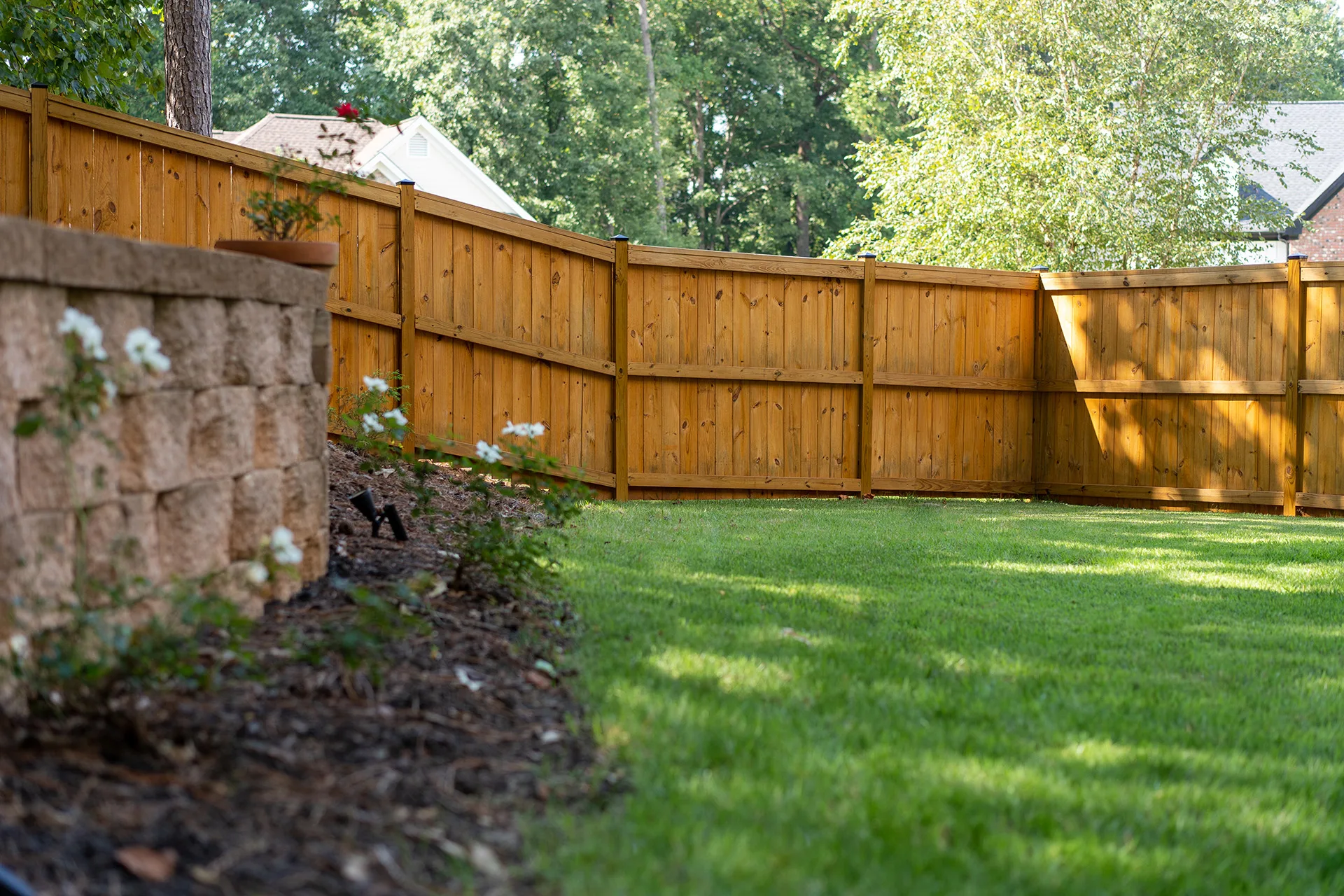
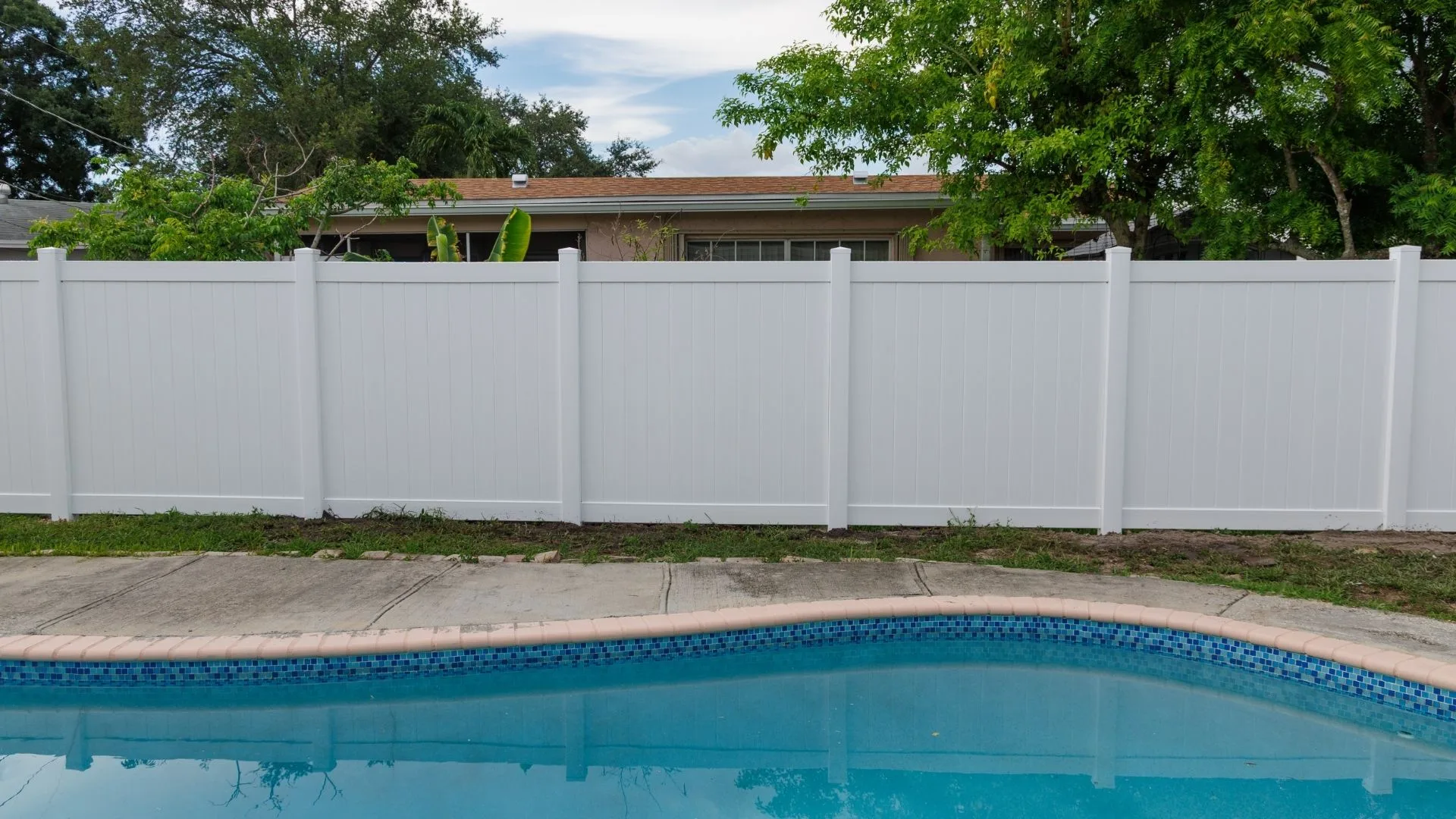
Stepping keeps each fence panel level and drops the whole assembly down in stair-step sections instead of angling it. It’s a standard approach for vinyl fence (particularly for vinyl stock that isn’t fabricated in-house like Superior Fence & Rail vinyl), and it’s often a popular call for wood fence on a slope with real elevation changes rather than one smooth grade. The tradeoff is a visible step at each break, which some homeowners want as a design detail and others minimize with tighter post spacing. Either way, it’s one of the two calls that decides whether a sloped yard fence in Olathe holds on strong for twenty years or needs a service call in three.
3. The Retaining Wall Conversation Nobody Budgets for at First
Somewhere past a certain grade, stepping and racking both start to strain, and a small retaining wall enters the conversation—not as an upsell, but as the thing that makes the fence above it behave. A retaining wall does two jobs at once: it holds the soil in place, and it gives the fence a stable, level starting point instead of a shifting one. Not every sloped yard needs one, but for the steeper cuts common in Olathe’s newer developments, it’s worth raising before the first stake ever goes into the ground.
4. Where the Water Really Goes Once It Leaves Your Yard
Here’s the part that’s easy to miss: the lowest point of your fence line is often the lowest point of your yard’s drainage, whether you planned it that way or not. Post footings at the bottom of a slope take on more moisture after every hard Kansas storm, which affects how deep they need to go and what gets backfilled around them. A gate placed right at that low point without a thought about grading has a way of ending up ankle-deep by spring—exactly what separates a sloped yard fence in Olathe that’s built to last from one that only looks finished on install day.
5. What a Fence Alone Can’t Fix
A well-built fence needs good grading and drainage working with it, not fighting it. If your yard already has a spot where water pools, or a slope steep enough that a retaining wall has crossed your mind for reasons that have nothing to do with fencing, that groundwork comes first. The fence is the last piece, not the first, and it only holds up as well as what’s underneath it.
Getting the Plan Right the First Time
None of this is complicated once someone’s looked at your actual yard instead of a spec sheet. Vinyl, wood, and aluminum all have a place on a slope, they just don’t get there the same way, which is really the whole point of uneven yard fence solutions in Olathe: matching the technique to the ground instead of the other way around. Superior Fence & Rail walks the property first and figures out where your yard lands on this list before building anything.
If your yard has been stalling a fence decision because the ground isn’t simple, that’s exactly the kind of project worth a real walk-through instead of a guess over the phone. A free on-site inspection from Superior Fence & Rail of Kansas City will tell you which of these five your yard falls into, and what a sloped yard fence in Olathe takes to get right the first time.
About Emma
Emma Butcher is a content writing professional at Urbain Marketing. She specializes in writing content for fence companies and fence installation in local markets.
Get A Fence Quote Today!
Great Fences Make Great Neighbors!
- Best Quality Fences
- Highest Customer Satisfaction Rating
- Fence Financing Options
- Licensed, Bonded & Insured
Your Superior Fence and Rail service team is standing by! Get a fence installation quote today!