
Fence Ideas for Small Providence Yards, Close Neighbors, and Corner Lots
- Emma Butcher
-
Jun 01 2026


Providence is a city that rewards density. The historic architecture, the walkable neighborhoods, the fact that you can get world-class pasta at ten o’clock on a Tuesday—all of it comes from the same source: a lot of people living very close together in very old neighborhoods. Federal Hill, the East Side, Elmhurst, Elmwood—these are places where character and proximity come as a package deal.
That proximity is exactly what makes fence ideas for small Providence yards more complicated than a Saturday afternoon project. The lot is tight. The neighbor is close. The city has rules that predate most of the houses. And whatever you build, somebody is going to be looking at it every day—including the people on the other side of it.
Here’s how a professional Providence fence company approaches the three tricky scenarios we encounter most often in PVD.
Scenario One: The Federal Hill Fishbowl
Anna finally bought the Victorian on Federal Hill she’d been watching for two years. The house is everything she wanted. The patio, unfortunately, sits about eight feet from her neighbor’s driveway—close enough that morning coffee feels like a public event.
She wants a privacy fence that works for close neighbors in Providence—but she’s also a realist about the social geometry here. Put the structural side of a wood fence facing the neighbor’s property and you’ve solved your privacy problem while handing them a different one.
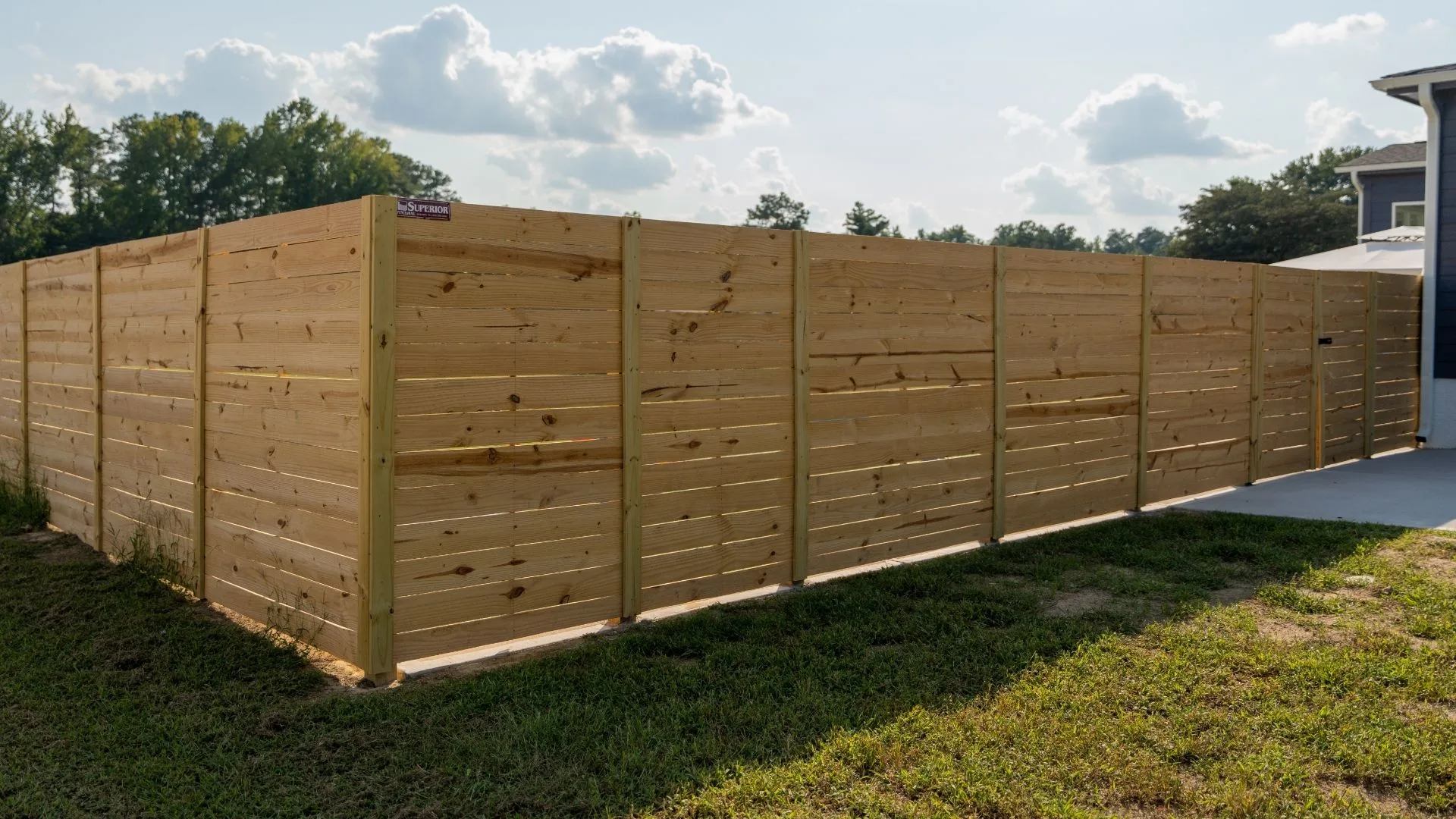
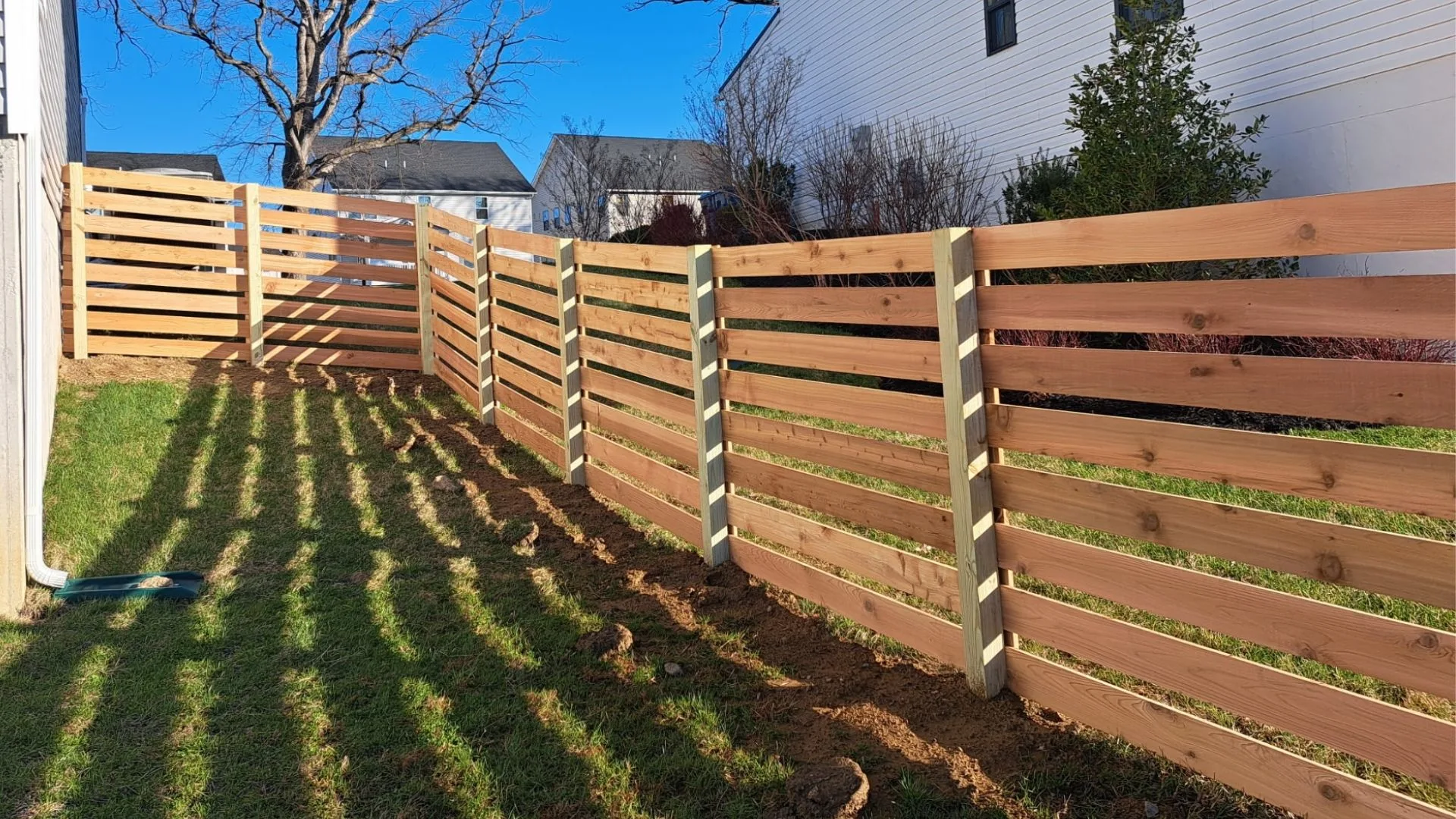
The fishbowl solution: Two options work well here. A wood shadowbox fence alternates pickets on opposing sides of the rail, creating a design that looks finished and intentional from both yards. It also allows airflow, which matters on a Providence summer evening. For more visual and acoustic privacy, solid vinyl with interlocking panels performs better—blocking both sightlines and sound, worth considering if the shared driveway gets noisy.
The legal question worth knowing: Providence zoning doesn’t always dictate which direction your fence faces, but the working standard—and the one most experienced installers follow—is that the finished side faces outward toward neighbors and the street. Worth understanding before materials are ordered, not after.
The neighbor conversation: There’s no law requiring you to consult your neighbor before building on your own property line. That said, a heads-up before installation day costs nothing and buys considerable goodwill—particularly in neighborhoods where the houses are close enough that construction noise is going to be very much their problem for a day. It’s common courtesy that tends to pay dividends when you’re going to be living next to these people for years.
Rhode Island does have specific regulations concerning partition fences directly on a shared property line. If this sounds like your design, a professional contractor like Superior Fence & Rail can guide you through the process. Contact us today for advice!
Scenario Two: The Elmhurst Backyard
Tom and Claire have a bungalow in Elmhurst, a rescue dog obsessed with squirrels, and a backyard that could generously be described as compact. Their instinct is to wrap the perimeter in a six-foot solid white vinyl fence and call it done.
The problem is that instinct works against the space. A solid wall around a small city lot doesn’t create privacy so much as it creates a very well-defined enclosure. It blocks light, stops airflow, and visually compresses a yard that doesn’t have room to spare.
The solution for fence ideas in a small Providence yard: Mixed materials, strategically placed. Solid vinyl along the rear property line handles the alley view and gives the dog a clear boundary. Along the sides, open aluminum picket fencing defines the property without closing it off—the eye travels past the fence line rather than stopping at it, and natural light stays in the yard. Aluminum carries the look of traditional wrought iron without any of the maintenance, which fits well in a neighborhood of well-kept colonials.
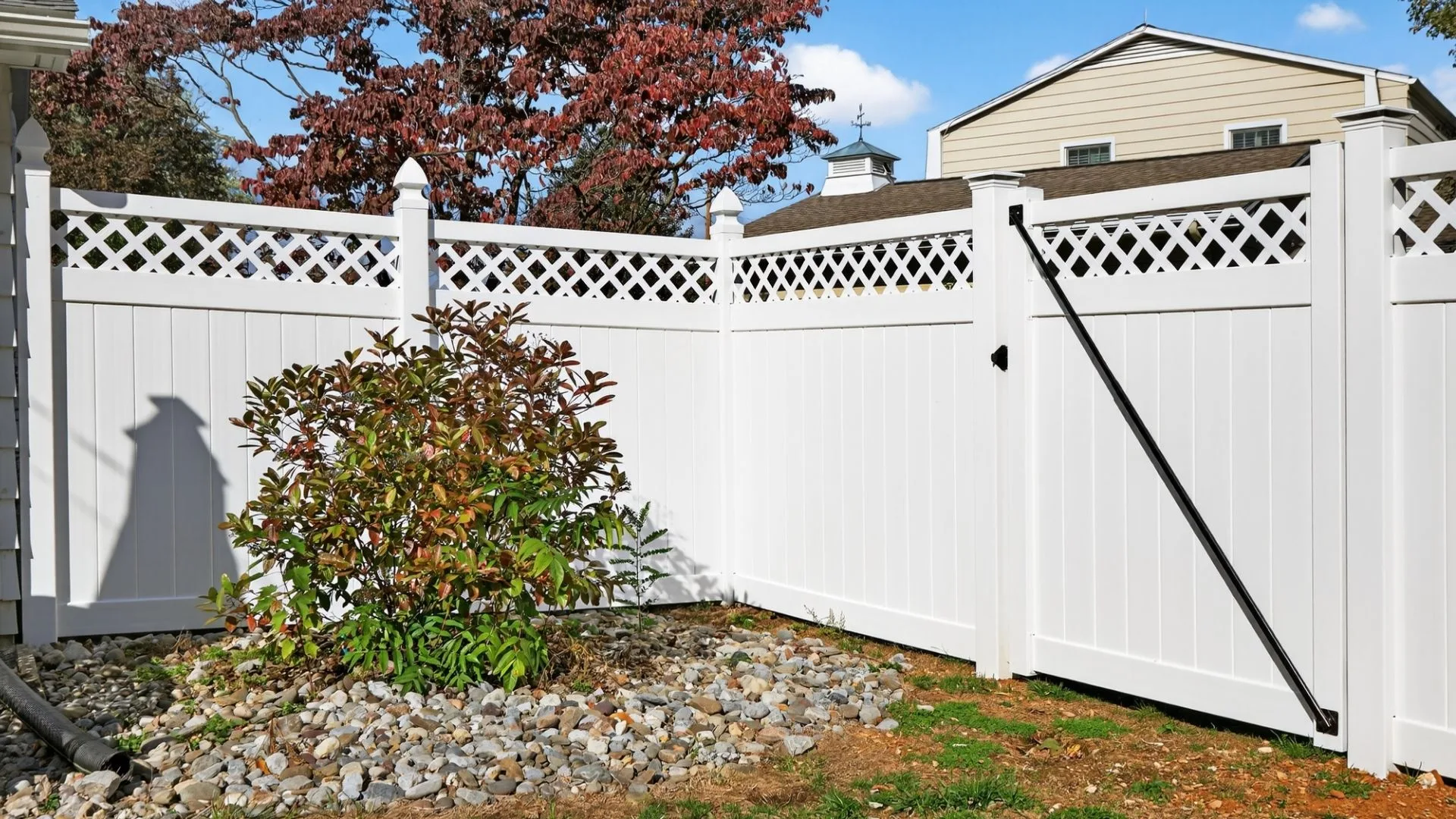
If privacy on the sides is non-negotiable, a vinyl fence with a decorative lattice top splits the difference—solid coverage at eye level with open lattice above that softens the visual weight and keeps the yard from feeling boxed in.
Scenario Three: The East Side Corner
The Petersons have a corner lot on the East Side—a generous yard by Providence standards—and a plan to maximize every square foot with a tall wood privacy fence running along both sidewalks.
They hire a contractor who starts digging. By day two, a city inspector has shut the project down.
What went wrong: Providence enforces what planners call a vision clearance triangle—a defined zone at intersections where structures can’t obstruct sightlines for drivers and pedestrians. A solid six-foot fence right at a corner creates genuine blind spots for anyone pulling up to a stop sign. Build there and the project gets red-tagged, the fence comes down, and you’ve paid twice for the same hole in the ground.
Building a corner lot fence in Providence correctly means knowing where that triangle sits before materials are ordered. A professional maps it out during the site visit. The solution is typically a clean transition—full privacy fencing along the back and interior sides of the lot, stepping down to a shorter open aluminum or picket section as the fence approaches the intersection. The yard stays secured; the sightlines stay clear.
What’s Actually Under the Ground
Once design and permits are sorted, you meet Providence’s other challenge: the dirt.
City lots in older neighborhoods don’t have soil so much as they have archaeology. Digging a post hole in Federal Hill or on the East Side means potentially working through oak root systems, buried cobblestones, old brick foundations, and compacted fill that’s been accumulating since the nineteenth century. None of this is unusual, but it requires the right equipment and the experience to handle it without compromising the installation.
Superior Fence & Rail brings the machinery and trained installation professionals to work through the tough spots properly. It’s not a selling point we lead with because it sounds impressive—it’s the baseline requirement for a fence that survives Rhode Island winters.
A Note on Local Rules
Providence zoning is worth understanding before you settle on a design. Height restrictions vary by zone, historic district overlays impose material and style requirements in certain neighborhoods, and setback rules determine how close to the property line you can actually build. Some of these rules are city-wide; others apply to a single street.
A professional installer knows which rules apply to your specific address and handles the permit process accordingly. If a contractor quotes the job without asking about your zone or your zoning district, that’s useful information about how they operate.
Turn Your Fence Ideas for a Small Providence Yard into Reality
Dense urban lots, close neighbors, and historic city regulations aren’t obstacles to a well-built fence—they’re just the world the project lives in. The right contractor has worked that world often enough to move through it without drama.
If you’re ready to move forward, reach out to Superior Fence & Rail of Rhode Island for a free on-site estimate. We know the neighborhoods, the codes, and the fences that work best for Providence homes.
About Emma
Emma Butcher is a content writing professional at Urbain Marketing. She specializes in writing content for fence companies and fence installation in local markets.
Get A Fence Quote Today!
Great Fences Make Great Neighbors!
- Best Quality Fences
- Highest Customer Satisfaction Rating
- Fence Financing Options
- Licensed, Bonded & Insured
Your Superior Fence and Rail service team is standing by! Get a fence installation quote today!