
Best Privacy Fence Options for Small Richmond Yards
- Emma Butcher
-
Jun 01 2026


Richmond’s older neighborhoods have a specific kind of charm that’s hard to manufacture. The Fan’s tree-lined streets, the painted Victorians in Oregon Hill, the rowhouses that define Church Hill—it’s the kind of architecture that makes people want to put down roots.
But the backyards can be a different story entirely.
City lots are tight. You might be working with a twenty-foot-wide patch of grass hemmed in by a shared alleyway on one side and a neighbor’s kitchen window with a direct sightline to your patio on the other. The instinct is to just put up a fence and solve the problem—but in a small urban yard, the wrong fence doesn’t just fail to help. It can make things worse, turning a modest but functional outdoor space into something that feels like well-landscaped claustrophobia.
If you’re planning a backyard fence layout to maximize usable space in Richmond, the decisions that matter most might not be the obvious ones. Height, material, airflow, gate swing, and local code all interact in ways that a suburban installation doesn’t have to think about. Here’s how to navigate all of it and design the perfect privacy fence for your small Richmond yard.
The Richmond Fence Rules Worth Actually Knowing
Most generic fence guides will tell you that backyard privacy fences cap out at six feet. In the City of Richmond, that’s not quite right—and the difference can matter on a tight lot.
RVA zoning allows privacy fences up to 6.5 feet in side and rear yards, with posts and decorative elements permitted to extend an additional 1.5 feet above that. On a small lot with close neighbors, that extra height isn’t cosmetic. It can be the difference between a fence that solves a problem and one that falls just short of it.
Front yards are capped at four feet regardless of what’s happening in the back, with limited exceptions in R-1 zoning districts. And if your property falls within an Old and Historic District—which covers significant portions of The Fan, Church Hill, and Jackson Ward—you’ll need design approval from the Commission of Architectural Review before work begins. CAR has specific opinions about materials, colors, and styles, and discovering those opinions after installation is an expensive lesson.
A professional installer who works regularly in Richmond knows the CAR process, coordinates with VA811 for utility marking, and handles the permit side before anyone starts digging in a tight alleyway. If you have any questions about your yard, Superior Fence & Rail of Richmond is here to help. Click for more info.
Comparing Privacy Fence Materials for Narrow City Lots
When the yard is small, material choice affects more than maintenance schedules. It affects the whole feel of the space.
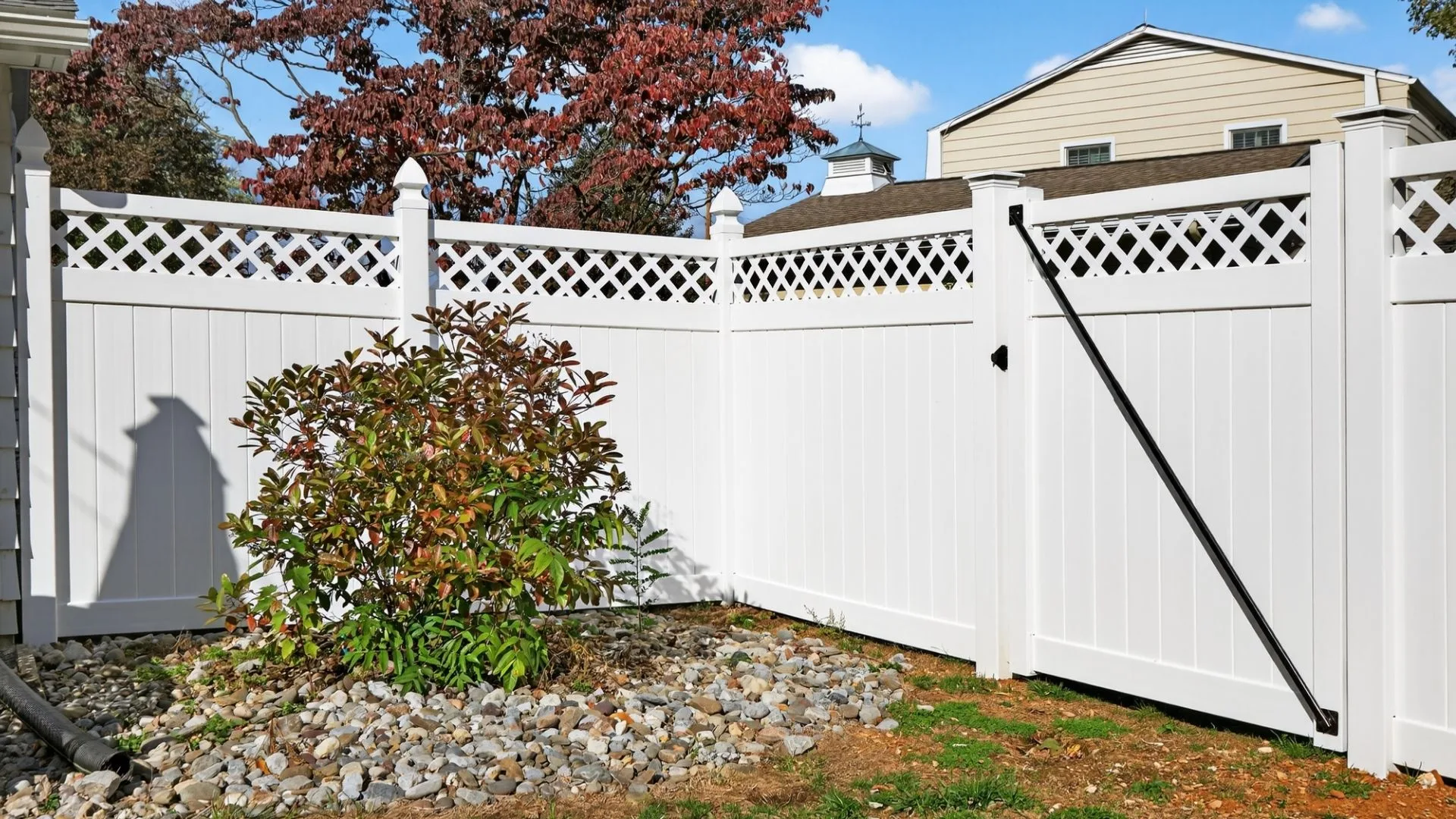
The case for vinyl: Sunlight is a premium resource in a narrow rowhouse yard, and dark materials spend it quickly. A white or light-toned vinyl privacy fence acts as a reflector rather than an absorber—bouncing available light around the space and keeping the yard feeling open rather than shadowed. Vinyl panels also run thinner than wood construction, which recovers a few inches of actual yard space. On a twenty-foot-wide lot, those inches are real. Take away any need to paint or stain and vinyl becomes the low-friction choice for small-space installations.
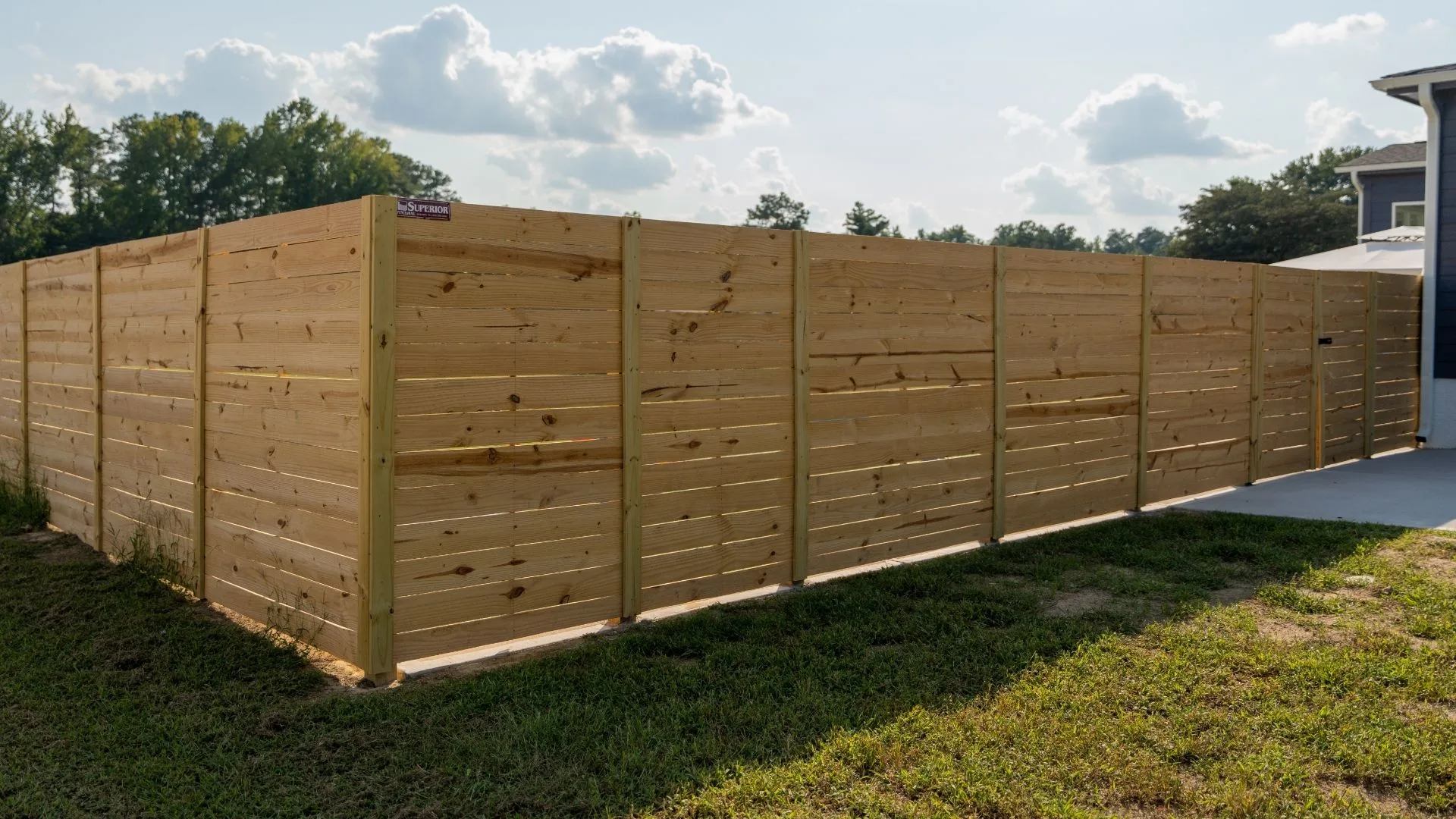
The case for custom wood: If CAR requirements, HOA guidelines, or personal preference point toward wood, the design decisions become more important than the material itself. A standard flat stockade fence on three sides of a small yard doesn’t help a small space feel bigger. Horizontal board fencing is the better direction—running boards left to right rather than vertically is a reliable way to make a narrow yard read as wider than it is. It’s the same principle that makes horizontal stripes work in interior design, applied to an outdoor structure.
Balancing Privacy and Airflow in Small Outdoor Spaces
Here’s the mistake that shows up most often on small Richmond lots: solid fencing on all three sides, floor to ceiling, no exceptions.
In a humid Richmond summer—and Richmond summers are genuinely humid—a completely enclosed yard stops functioning as an outdoor space and starts functioning as a heat trap. No airflow means no relief, and what felt like a private retreat in April becomes somewhere you avoid in July.
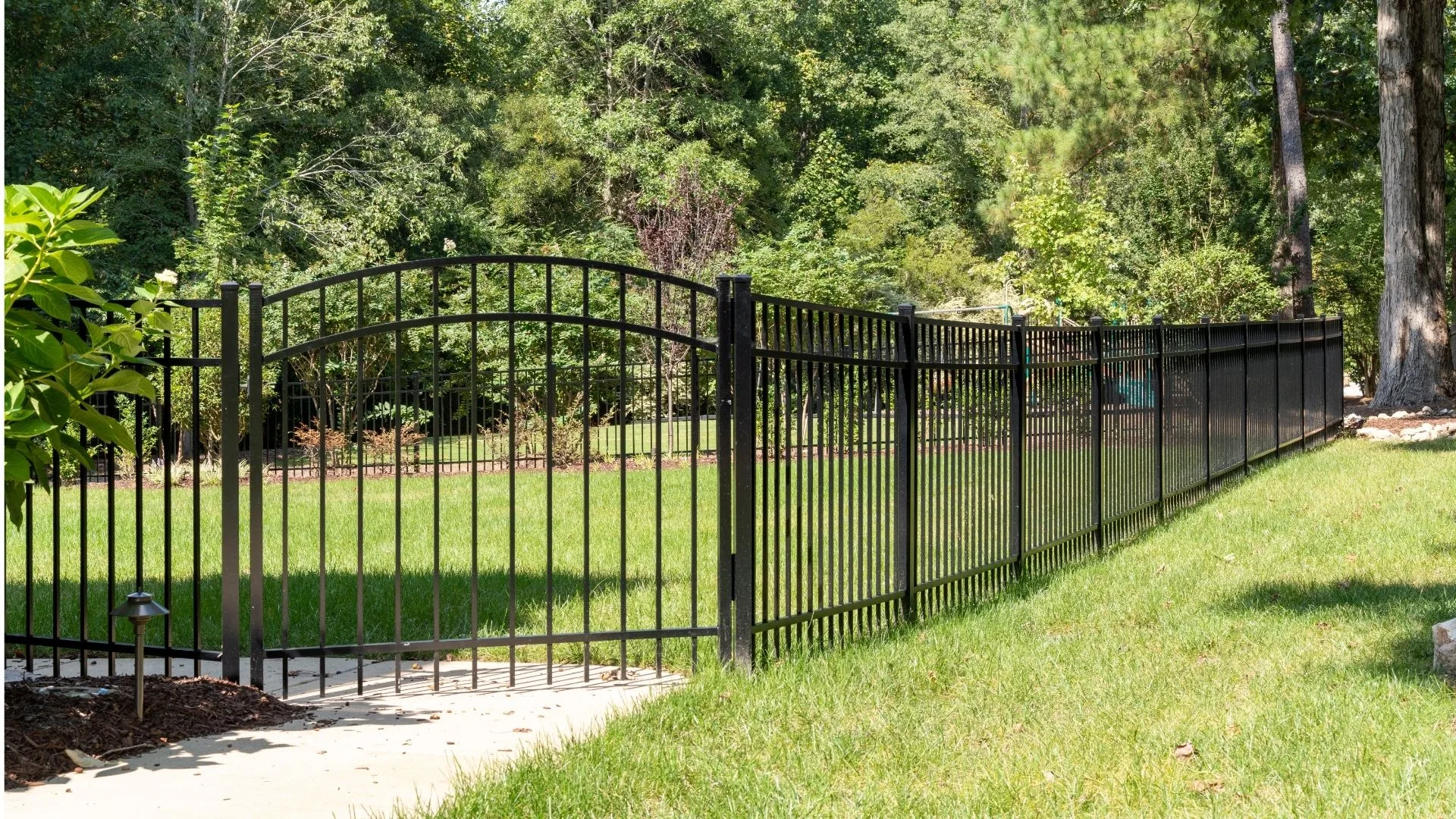
The solution is a semi-privacy fence design. Keep the lower five feet solid to handle the sightlines you care about covering up—the alley view, the neighbor’s ground-level windows, the visual clutter of trash cans and utility equipment. For the upper portion, switch to a decorative lattice top or open spindle detail. This single design decision allows cross-ventilation, lets natural light reach the yard from above the fence line, and visually softens what would otherwise be a solid wall on three sides.
A wood shadowbox fence is a great alternative for homeowners who want a more traditional look—pickets alternating on opposing sides of the rail create enough gap for air movement while maintaining privacy at any normal viewing angle. It also reads as finished from both sides, which matters when the neighbor is six feet away.
Don’t Overlook the Alley Gate
In a small Richmond yard, the gate is infrastructure as much as it is an entry point, and it deserves more planning than it usually gets.
The swing direction alone can create problems that aren’t obvious until installation day. A gate that swings outward into a narrow city alley may interfere with foot traffic, block a parked car, or create a hazard. A gate that swings inward may consume the only corner of the yard designated for trash cans or recycling bins. Neither problem is unsolvable, but both require someone to think through the daily-use reality of your space before the hinges are set.
A professional installer walks the yard with an eye toward how you actually use it—not just where the fence line goes, but where the gate needs to land, how much clearance the swing requires, and what happens to the usable square footage on both sides of it.
Getting the Layout Right
Fencing a tight city lot is a precision exercise. Property lines in older Richmond neighborhoods can be ambiguous, alleyway easements add another variable, and the margin for error on a twenty-foot-wide lot is genuinely small.
The design decisions that feel minor at the estimate stage—fence height, material choice, lattice versus solid top, gate swing direction—have compounding effects in a small space. Getting them right requires someone who’s worked in these yards before and understands what the finished space needs to feel like, not just what it needs to look like on a plot plan. If you’re ready to turn an exposed city lot into a yard worth spending time in, reach out to Superior Fence & Rail of Richmond for a free on-site estimate. We know the historic districts, the alleyway logistics, and the zoning details that make Richmond installations different from everywhere else.
About Emma
Emma Butcher is a content writing professional at Urbain Marketing. She specializes in writing content for fence companies and fence installation in local markets.
Get A Fence Quote Today!
Great Fences Make Great Neighbors!
- Best Quality Fences
- Highest Customer Satisfaction Rating
- Fence Financing Options
- Licensed, Bonded & Insured
Your Superior Fence and Rail service team is standing by! Get a fence installation quote today!