
Best Fence Materials for Salt Lake City Weather: A Straight Talk Guide for Wasatch Front Homeowners
- Emma Butcher
-
Jun 01 2026


Hey neighbor, put down the fry sauce for a second—we need to talk about your fence!
Look, you live on the Wasatch Front. We don’t need to tell you about the weather here. One morning you’re in a blizzard at Alta, and by afternoon you’re getting a sunburn on your back patio in Cottonwood Heights. The inversion turns the valley into a snow globe. The canyon winds come ripping out of Parley’s like they’re late for work. The summer sun at 4,300 feet doesn’t mess around—we’re closer to it up here, and it knows it!
So when it’s time to put a fence around your yard, you can’t just pick something because it looked good on a house you saw in Phoenix. You need the best fence for Salt Lake City weather—meaning 1) something that can handle UV rays that would embarrass most of the Southwest, 2) snow loads that make February feel personal, and 3) wind events that have blown lawn furniture clear into the next zip code. Let’s talk fence materials, Utah-style.
What Is the Best Fence for Salt Lake City Weather, Really?
Great question! Here’s the honest answer: it depends on where you live and what the yard needs to do. But before we get into materials, let’s talk about the conditions out here trying to wreck your fence—because Salt Lake City is not your average market.
The sun is the sneaky one
Everyone worries about snow. Nobody thinks about UV until their vinyl fence looks like a yellowed paperback they left in the car.
At Wasatch Front elevation, the atmosphere is doing less filtering. That means cheap outdoor plastics degrade faster here than they would at sea level. It’s just a fact.
The dry-wet cycle—yeah that’s sneaky, too
Utah summers pull moisture out of wood like they’re trying to make jerky. Then winter shows up and banks wet snow against the base of your fence for three months straight.
That back-and-forth is genuinely brutal on organic materials—more so than either condition alone.
The canyon winds are harder to ignore
You already know this if you live near the mouth of Parley’s or Emigration Canyon.
These aren’t gentle breezes. They’re the kind of gusts that make a solid privacy fence into a very large, very expensive sail.
Now that we understand the enemy—here’s how each fence type stacks up.
Vinyl: The Low-Maintenance Workhorse (If You Buy the Right Kind)
Let’s get this out of the way: cheap vinyl in Utah is a bad idea. We’ve seen bargain-bin panels turn discolored and brittle faster than the Jazz’s playoff hopes in a rebuilding year. The high-altitude UV exposure accelerates oxidation in low-grade plastic—the surface chalks, the material stiffens, and then one cold snap later you’ve got a shattered panel and a dog with an escape plan.
Professional-grade vinyl is a completely different product. Superior Fence & Rail uses 100% virgin vinyl with UV protection built directly into the material—not painted on, not sprayed on, baked in. It stays flexible in the cold, holds its color in the sun, and handles the canyon gusts with deep-grooved rails that lock the whole system together when the wind gets serious. Vinyl comes in more shapes and styles than just plain privacy fence, too. Find the right vinyl fence style for your home!
Bottom line: If you want privacy, zero maintenance, and something that doesn’t care that we live at elevation—vinyl is your answer. Just don’t cheap out on it!
Wood: Beautiful, Demanding, Totally Worth It (If You’re Ready)
Wood looks incredible against the mountain backdrop. There’s nothing that fits a Millcreek craftsman or a Provo colonial quite like a well-built pine or cedar fence. We’re not here to talk you out of it!
But the vinyl vs. wood fence in Salt Lake City debate has a Utah-specific wrinkle you need to know about. The summer heat here dries wood out fast—faster than most climates—which causes splitting, shrinking, and gaps in your privacy fence that weren’t in the original plan. Then winter comes and does the opposite. That cycle chews through cheap lumber and cheap fasteners in a hurry.
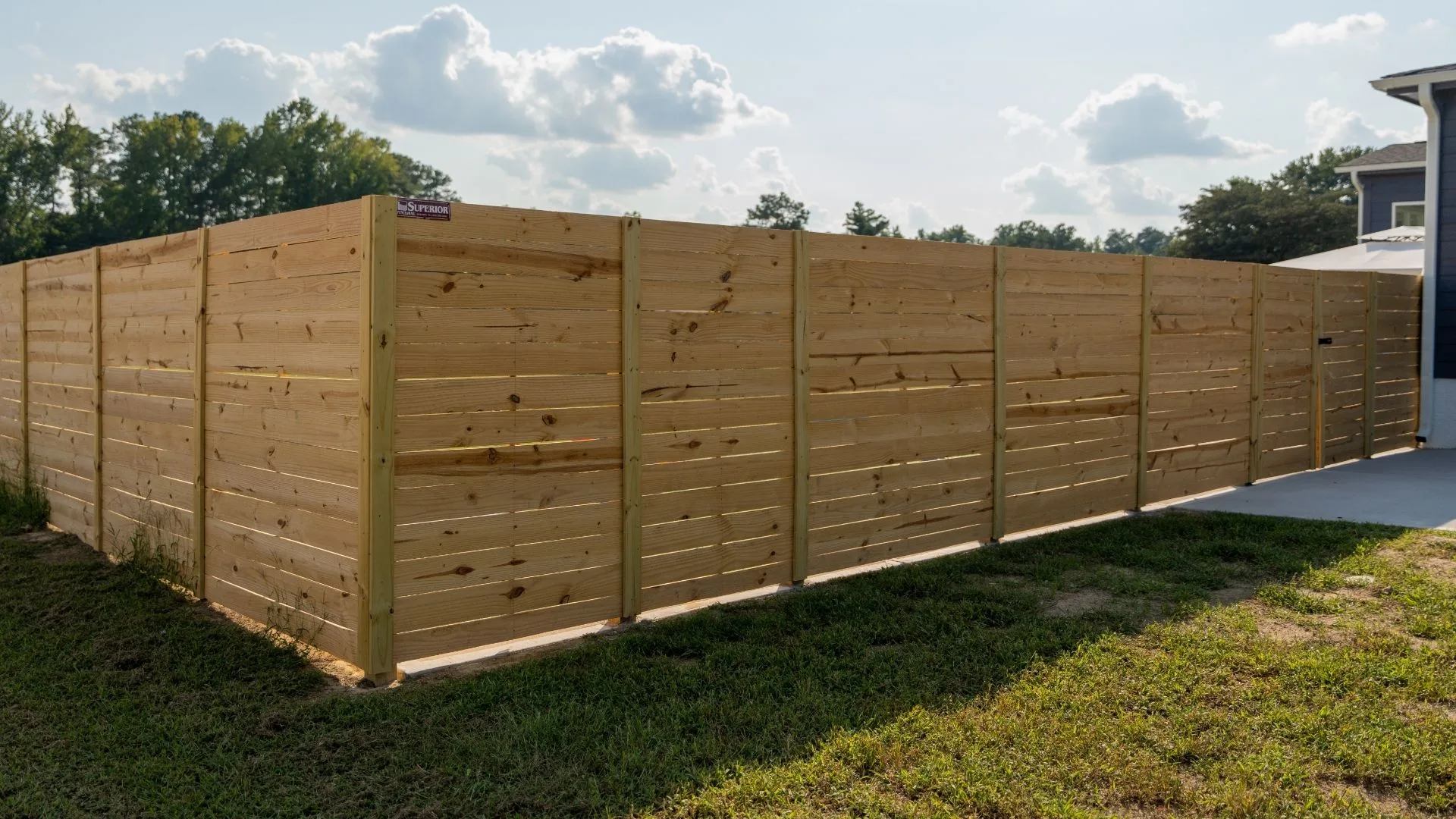
Here’s what doing it right looks like: premium pressure-treated pine, built on-site to rake with your yard’s actual grade, fastened with hot-dipped galvanized ring-shank nails that grip wood fibers mechanically so they don’t back out when the temperature swings. Because in Utah, the temperature absolutely will swing.
Wood also needs regular staining or sealing to stay protected. That’s a real commitment, not a suggestion. If your idea of fence maintenance is glancing at it from the kitchen window twice a year, wood might not be your material!
Bottom line: Wood is the right call if you love the aesthetic and are genuinely willing to maintain it. Get the materials and fasteners right, and it handles the valley just fine.
Aluminum: For When the Wind is in Your Face (and on Your Fence)
If you live near a canyon mouth—and you know who you are—a solid privacy fence isn’t always your friend. Downslope wind events off the Wasatch Range put serious lateral force on solid panels, and fighting that physics is a losing proposition.
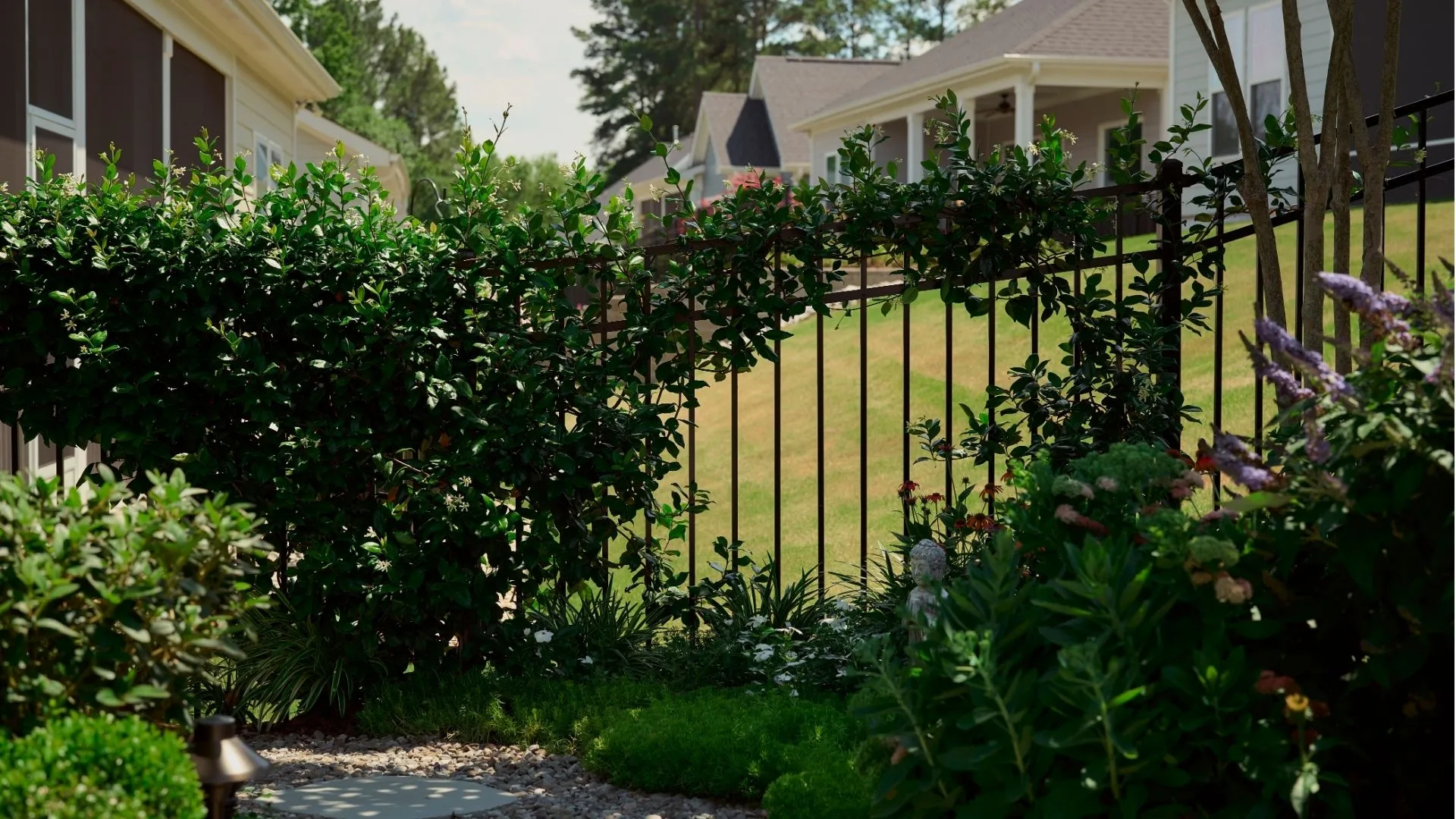
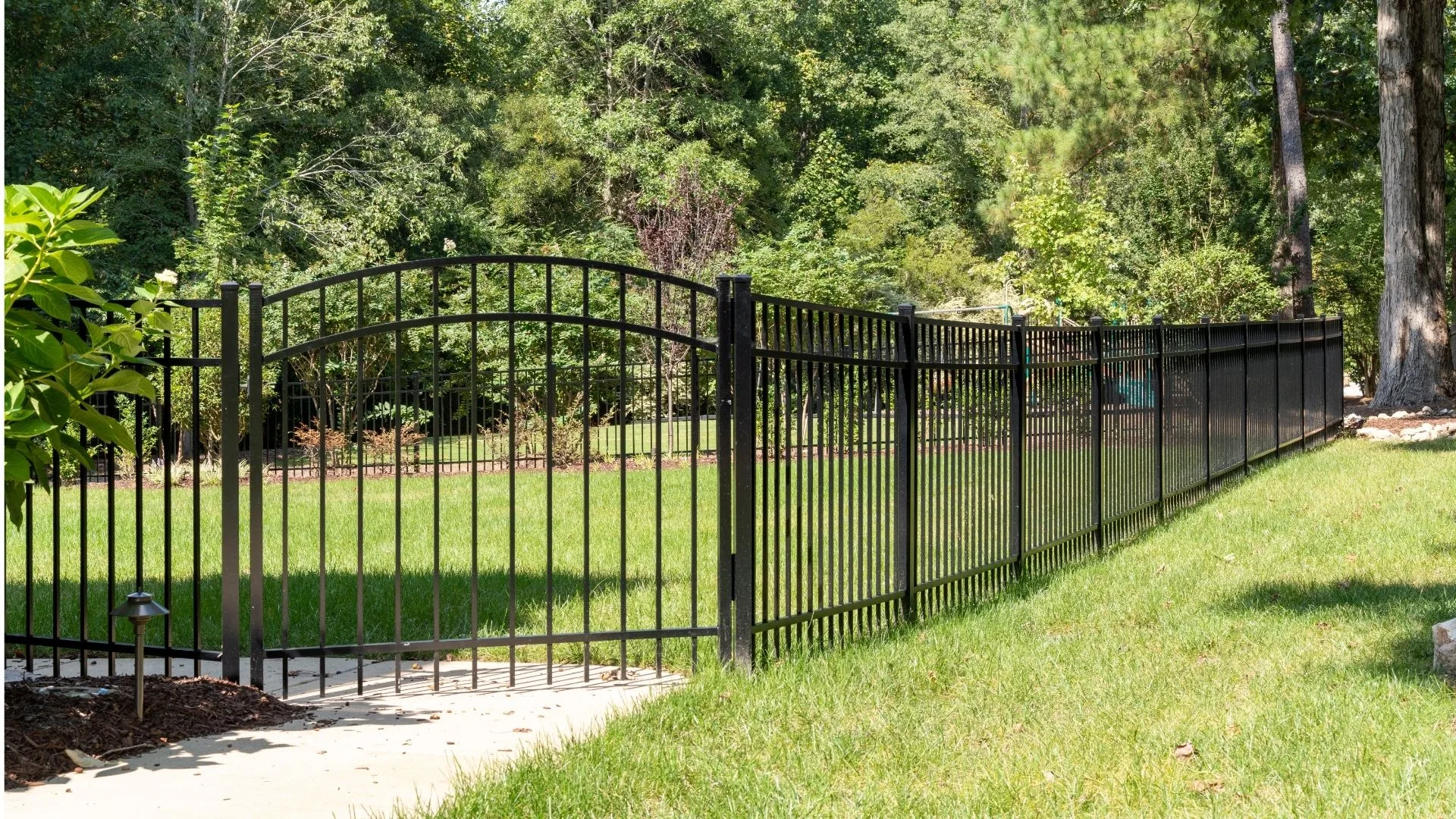
Aluminum sidesteps the problem entirely. Open picket design lets the gusts pass through rather than load up against the fence. No sail effect, no panel failures, no post-storm archaeology in the neighbor’s yard.
Aluminum also can’t rust—it’s chemically incapable of it—which matters when spring snowmelt is running across your driveway for six weeks straight. Our powder coat finish handles both the UV exposure and the wet seasons without fading or flaking. And honestly? An aluminum fence against a mountain view looks genuinely sharp. You’re not giving up aesthetics to get performance here.
Bottom line: Wind-exposed lots, properties with views worth preserving, pool enclosures, front yards—aluminum does it all and asks for more.
Composite: The Premium Move for Busy Roads and Mountain Luxury
If you live on a busy arterial—say, anything off Bangerter or near a State Street intersection—you already know that road noise follows you into the backyard. Composite fencing is the material that actually addresses that.
This isn’t the plastic lumber from the ‘90s that cups and warps! Trex composite uses recycled wood and plastic in a dense, stable compound that doesn’t react to Utah’s dry/wet cycle the way natural lumber does. It won’t split in August or absorb moisture through a January snowbank. And because it’s so dense, it’s the strongest sound barrier of any fence material on the market—the interlocking pickets leave no gaps, even after summers that would shrink conventional wood boards apart.
It’s a premium product at a premium price. But for homeowners who want real noise reduction and a fence that genuinely requires nothing from them year after year, composite earns it.
Bottom line: Busy roads, premium installations, zero-maintenance lifestyles. If Trex is in your budget, it’s worth every penny.
Chain Link: The Undefeated Utility Option
Look, there are more important qualities in a fence than just looking pretty. If you’ve got a steep bench lot, rocky soil, a big dog, and a practical outlook on life—chain link is a completely legitimate answer and nobody’s going to pretend otherwise.
Snow moves through it. Canyon winds ignore it. Galvanized or vinyl-coated chain link doesn’t rust in snowmelt. It follows irregular terrain without drama. It works for decades without asking for anything. In a market where half the lots along the Wasatch benches look like they were designed by someone who’d never heard of a level, chain link’s flexibility is genuinely valuable. If you’re talking about the best fences for Salt Lake City weather, it can’t be left out.
Bottom line: Utility over aesthetics, tough terrain, large properties, working yards. Chain link just works.
One Thing Every Material Has in Common
Here’s the thing nobody puts in the brochure: none of this matters if the posts aren’t set correctly.
Utah soil freezes deep. The expansion force of frozen wet ground is substantial, and posts that aren’t anchored below the frost line are going to move when the ground does. It doesn’t matter if you’ve got the nicest vinyl on the Front Range—a fence is only as solid as what’s holding it in place. Superior Fence & Rail digs below the frost line and pours proper concrete footings on every installation. That’s not a selling point. That’s the baseline.
Let’s Talk About Budget
The right fence for your property shouldn’t be limited by what you have available right now. Superior Fence & Rail offers flexible financing options—because choosing between the material your yard needs and the one that fits this month’s budget isn’t a choice you should have to make. Ready to figure out what makes sense for your specific yard, lot, and canyon wind situation and design the best fence for Salt Lake City weather? Reach out to Superior Fence & Rail of Salt Lake City for a free on-site estimate. We know the elevation, the soil, and what holds up out here. Come with your questions—we’ve got straight answers.
About Emma
Emma Butcher is a content writing professional at Urbain Marketing. She specializes in writing content for fence companies and fence installation in local markets.
Get A Fence Quote Today!
Great Fences Make Great Neighbors!
- Best Quality Fences
- Highest Customer Satisfaction Rating
- Fence Financing Options
- Licensed, Bonded & Insured
Your Superior Fence and Rail service team is standing by! Get a fence installation quote today!