
Wood, Vinyl, Aluminum, Chain Link, or Composite: Best Fence Materials for San Jose Yards
- Emma Butcher
-
May 29 2026


The most common question San Jose homeowners ask when shopping for a fence is about durability: which material holds up best? The answer, frankly, is almost all of them. How different fence materials perform in Silicon Valley’s climate is less dramatic than it would be in Houston or Minneapolis—no freeze-thaw cycles wreaking havoc, no constant humidity rotting wood from the inside out. What matters in the Bay Area is UV exposure, periodic wind events, HOA compliance, and how much time you want to spend on maintenance five years from now.
The best fence materials for San Jose yards are the ones that match your specific goals, not just the ones built to survive extreme weather. Superior Fence & Rail of San Jose installs all six fence types in this guide—here’s how they stack up.
Which Fence Material is Best for a San Jose Yard? A Quick Comparison
| Material | Best For | Privacy | Maintenance | Cost Tier |
| Vinyl | Longevity, HOA yards, privacy | ●●● High | ● Very Low | ●● Mid |
| Wood | Natural look, budget-conscious buyers | ●●● High | ●●● Moderate– High | ● Affordable–Mid |
| Redwood | Classic Bay Area look, reduced upkeep | ●●● High | ●● Low– Moderate | ●●● Premium |
| Aluminum | Pool areas, decorative borders | ● Low | ● Very Low | ●● Mid–Premium |
| Chain Link | Security, pets, utility | ● Low (upgradeable) | ● Very Low | ● Affordable |
| Composite (Trex) | Full privacy, zero maintenance | ●●● High | ● Virtually None | ●●● Premium |
Comparing wood, vinyl, aluminum, and composite fencing for San Jose homes is cleaner when you start with a side-by-side snapshot. Use the table as your quick reference, then read the full breakdown below for the details that don’t fit in four columns—climate performance, construction quality, and the San Jose-specific considerations that should factor into your decision.
Vinyl Fencing: The Set-It-and-Forget-It Choice
Vinyl fencing has been the most popular privacy screen in the country for decades. You never have to sand or stain it, the cost is in most homeowner’s budgets, and it looks great paired with most architectural styles. That’s not to say it hasn’t had detractors over the years, though, mostly due to the bad rap that comes with low-quality vinyl. That stuff is flimsy, turns chalky in the sun, and can’t stand up to wind or impact.
The remedy to that is better vinyl. Superior Fence & Rail fabricates its own vinyl from 100% virgin material—not the recycled “regrind” stock that discounters use—with thicker walls and UV inhibitors built in. The proprietary SolarShield coating handles the UV load from San Jose’s 300-plus sunny days per year, and the StayStrong rail reinforcement prevents the mid-span sag that plagues cheaper vinyl over time.
Best for:
- Full backyard privacy in HOA-regulated communities (Almaden, Cambrian, Evergreen) where material and color standards are written into the CC&Rs
- Households that want a permanent fence with minimal long-term upkeep
- Buyers planning to stay put for 20-plus years who want a lifetime transferable warranty
Wood Fencing: The Affordable Natural Option
Wood fencing—pressure treated pine, specifically—is the standard entry point for homeowners who want the warmth of a natural material at a budget-conscious price. The treatment process (typically alkaline copper-based preservatives in modern production) protects the lumber against rot and insect damage, which matters even in San Jose’s dry climate once posts go into ground contact.
Superior Fence & Rail stick-builds every wood fence on location rather than assembling pre-made panels—heavy-duty lumber, hot-dipped galvanized ring shank nails, constructed to exceed Miami-Dade wind code specifications. That construction method matters: ring shank nails grip the wood at the grain level and resist the pull-out that standard nails develop as lumber expands and contracts through the seasons.
The tradeoff with pressure treated pine is maintenance. Without regular staining or sealing, a wood fence will gray, crack, and check over time—San Jose’s UV exposure accelerates that process more than wet rot, which is the primary villain in other climates. Budget for a re-seal every two to three years to keep a wood fence performing and looking its best.
Best for:
- Homeowners who want a natural material at an accessible price point
- Properties with grade changes or irregular lot lines that benefit from on-site custom sizing
- Buyers comfortable with periodic maintenance as part of homeownership
Redwood Fencing: Northern California’s Native Material
Redwood deserves its own section, especially in the Bay Area. This isn’t an exotic import—it’s the original California fence material, prized for centuries because of a natural rot resistance that pressure treated pine achieves only through chemical processing. Water tanks on farms across the state were built from redwood stakes for exactly that reason.
Where PT pine requires regular sealing to hold its color and structural integrity, redwood weathers more gracefully without it, developing a natural silver-gray patina that suits the dry California landscape. For homeowners who want the character of natural wood without committing to PT pine’s maintenance schedule, redwood is the Bay Area step up—particularly on street-facing installations where the fence is part of the property’s curb appeal.
Best for:
- Buyers who want natural wood character with reduced long-term maintenance demands
- Homes where unfinished lumber complements drought-tolerant landscaping or existing hardscaping
- Homeowners drawn to a material with genuine regional heritage
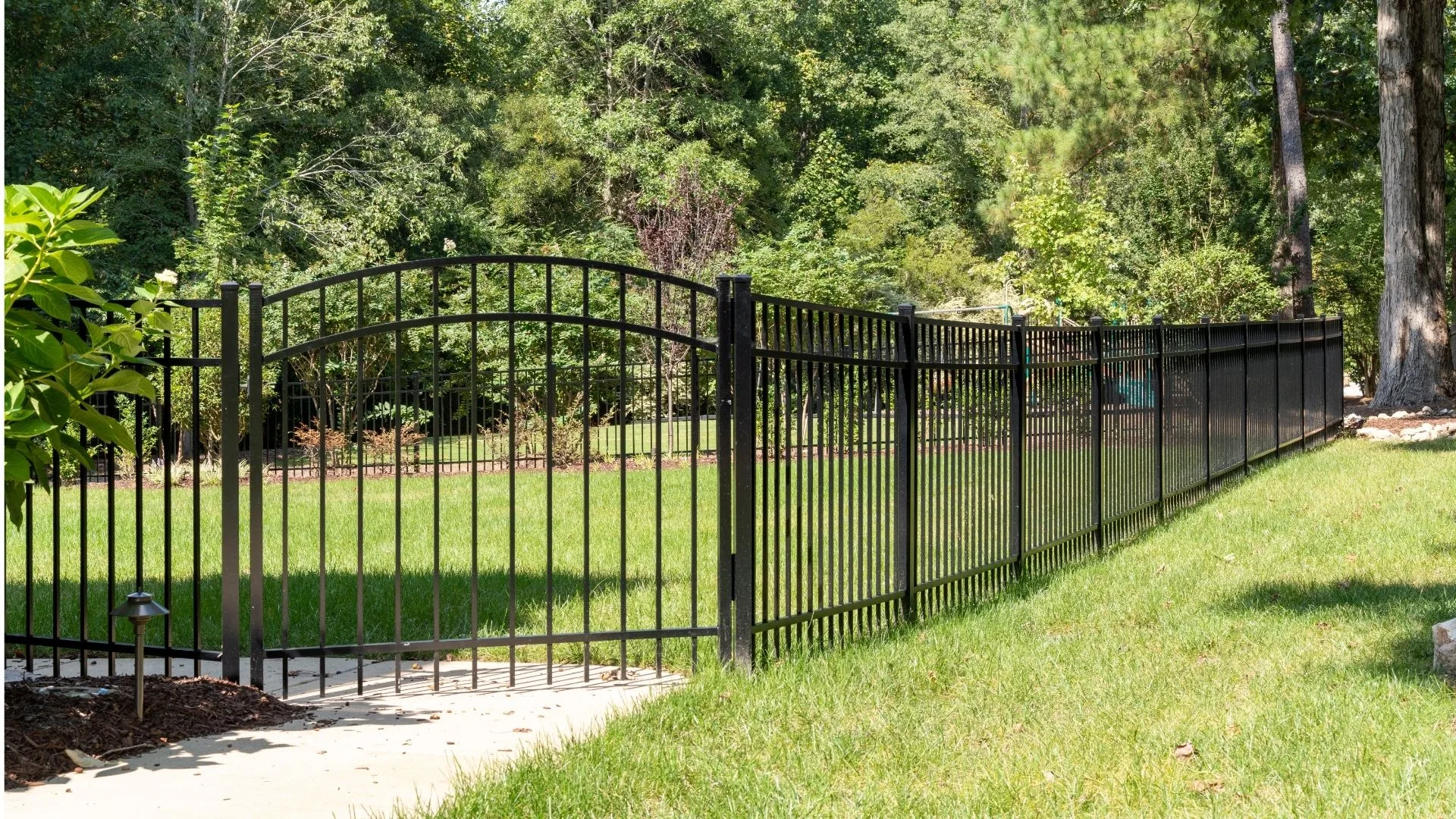
Aluminum Fencing: Where Form Meets Function
Aluminum is not a privacy fence, and it doesn’t try to be. What it does exceptionally well is define a space, frame a view, or enclose a pool with clean architectural lines and zero corrosion risk. Superior’s aluminum is powder-coated after assembly to AAMA 2604 standards—capable of withstanding 3,000 hours of salt spray testing, double the industry’s 1,500-hour baseline. For properties with seasonal ground moisture or proximity to the Bay, that’s meaningful protection.
Best for:
- Pool enclosures, where Santa Clara County municipalities often specify fence height and self-closing gate requirements
- Front yards where visibility and curb appeal both matter
- Homeowners interested in custom fabrication—Superior’s in-house team designs fully custom panels, gates, and rails with unique silhouettes and color options
Chain Link: The Utility Player That Earns Its Keep
Chain link doesn’t attract compliments at dinner parties. It gets results. Rust-resistant (available in zinc galvanized or vinyl-dipped finish), structurally flexible, and scalable from a 4-foot dog run to a 12-foot high-security perimeter, chain link handles applications that no other material addresses as cost-effectively.
The objection is usually privacy—and it’s a solvable problem. Privacy slats woven into the mesh close the sightlines significantly and completely change up the appearance. For rental properties, side yards, commercial lots, or utility enclosures where function matters more than aesthetics, chain link is the most practical entry on this list.
Best for:
- Pet containment, particularly large or reactive dogs that need a secure perimeter
- Side yards and utility areas where budget is the primary constraint
- Commercial properties or any installation requiring a security-grade solution
Composite (Trex) Fencing: The Long-Game Investment
Trex composite fencing is engineered from 95% recycled content and built to resist rot, insects, and wind loading without any of the maintenance demands that wood carries. The interlocking picket system creates full privacy with no gaps—a clean, picture-frame appearance that reads as premium from the street or the appraisal. It won’t warp, won’t fade, and won’t require sealing every two years.
At a premium price point, Trex makes the strongest financial case for homeowners who calculate total cost of ownership over 20 years rather than just the upfront number. When you factor in refinishing labor, materials, and the repairs that wood accumulates over time, the math often favors composite.
Best for:
- Buyers making a forever-home investment
- Households that want complete privacy with zero maintenance commitment
- Anyone who has already owned a wood fence and wants a different outcome this time
One San Jose-specific note: Properties in Wildland-Urban Interface zones near the Diablo foothills should confirm local fire codes before selecting a material—some WUI areas carry restrictions worth knowing upfront.
Making the Final Call
“What fence material should I choose for my San Jose backyard?” is a question with a clear answer once you’ve mapped out your priorities for your yard. Privacy, aesthetics, security, low maintenance, and budget all pull in different directions, and no single material wins every category. The best fence materials for San Jose yards are the ones that match your specific goals for the next 20 years.
That’s the value of working with a contractor who installs all of these fence types. Superior Fence & Rail carries every material on this list, fabricates vinyl and aluminum in-house, and brings a 94% customer satisfaction rating and over 30,000 five-star reviews to every project. From HOA paperwork and permits to expert installation backed by a 3-year workmanship warranty, the process is built to be straightforward.
Superior Fence & Rail of San Jose is ready to work with you to create your dream backyard. Request a free quote to start the conversation. The right fence for your yard is one decision away.
About Emma
Emma Butcher is a content writing professional at Urbain Marketing. She specializes in writing content for fence companies and fence installation in local markets.
Get A Fence Quote Today!
Great Fences Make Great Neighbors!
- Best Quality Fences
- Highest Customer Satisfaction Rating
- Fence Financing Options
- Licensed, Bonded & Insured
Your Superior Fence and Rail service team is standing by! Get a fence installation quote today!