
Which Comes First in Stamford: HOA Approval or Your Fence Permit?
- Emma Butcher
-
Jul 28 2026


Most people building a fence in Stamford treat the city as the last box to check. You look up the zoning permit, you picture yourself at the counter in the Government Center on Washington Boulevard, and you figure that once the city signs off, you’re clear to start digging.
In a lot of places, you’d be right. Even in Stamford, the city permitting process is straightforward. The thing that makes a homeowner rent a post puller (and pull out their hair) is the approval nobody warned them about—the one that comes from their own homeowners association. That’s what makes Stamford HOA fence approval a mandatory research topic before you fill in a single city form, and it’s the first thing the Stamford fence company you hire should be asking you about.
Here’s the uncomfortable truth: you can do everything the City of Stamford asks, pass inspection, and still open your mailbox to a letter from your association telling you the fence has got to change. The city and your HOA have two completely different sets of requirements, and checking one box doesn’t necessarily check the other.
Why Stamford HOA Fence Approval Is the Step People Skip
An HOA doesn’t work like a permit office, and that’s the root of the trouble. A permit is a form and a fee—you meet the requirements, you pay, you’re done. Approval from your association is a judgment call made by a committee of your neighbors, and it lives in a document most homeowners signed at their closing and haven’t looked at since.
Fairfield County makes it especially easy to lose the thread. On a big, wooded lot up in North Stamford, the city regs may be all you’re dealing with. A cluster of new townhomes near the Springdale station, though, and there’s an architectural committee that has no problem telling you what’s wrong with the color of your gate. Same city, wildly different outcomes—and the only way to know which side you’re on is to check.
Finally, the ones who care can make it expensive. An association that requires cedar and finds you’ve put up white vinyl doesn’t mail you a polite suggestion. It can order you to bring the fence into compliance—re-stain it, modify it, or pull it out of the ground—and add fines while you sort it out. The city can cite you too, if you skipped the zoning permit or ran over the height limit.
Those are two ways to pay for the same fence twice if you don’t start out with a plan and some professional assistance.
Two Gatekeepers, Two Completely Different Checklists
Before you spend a dollar, it’s important to research exactly what each one looks at, because they barely overlap—and because Fairfield County HOA fence restrictions are where most of the surprises hide.
What the City of Stamford Checks
The city’s questions are about placement and safety. A fence in Stamford needs a zoning permit, and that permit requires a property survey—an actual drawing of where your lines fall. From there it’s mostly numbers. No fence taller than six feet in a front or side yard. No taller than eight in the rear, and anything over seven back there pulls in a building permit too. On a corner lot, you’ve got to stay 25 feet back from both street frontages so you’re not blinding the neighbor backing out across the street. Go past eight feet anywhere and you’re booking a trip to the Zoning Board.
Notice what’s missing from that list. The city doesn’t care whether your fence is cedar or vinyl or aluminum. It has no opinion on the color, and it won’t weigh in on whether a solid privacy panel “fits the neighborhood.” That entire conversation—the aesthetics of your fence—is one the city sits out…
What Your HOA Checks
…and the entire conversation your association wants to have. Fairfield County HOA fence restrictions live almost entirely in the space the city ignores. A typical covenant will have plenty to say about the fence type you’re allowed to use, the approved colors, the style permitted out front versus in back, and a height cap that’s often shorter than the city’s. Some associations publish an approved-products list. Some require that any fence facing the street be an open style—picket or aluminum—and save solid panels for the backyard. A few will hand you a paint chip and mean it.
None of that shows up on a zoning permit. All of it can stop your project cold.
Common Traps: How Vinyl and Wood Trip the Covenants
The Fairfield County HOA fence restrictions that snag people usually land on the two fence types most homeowners want: vinyl and wood.
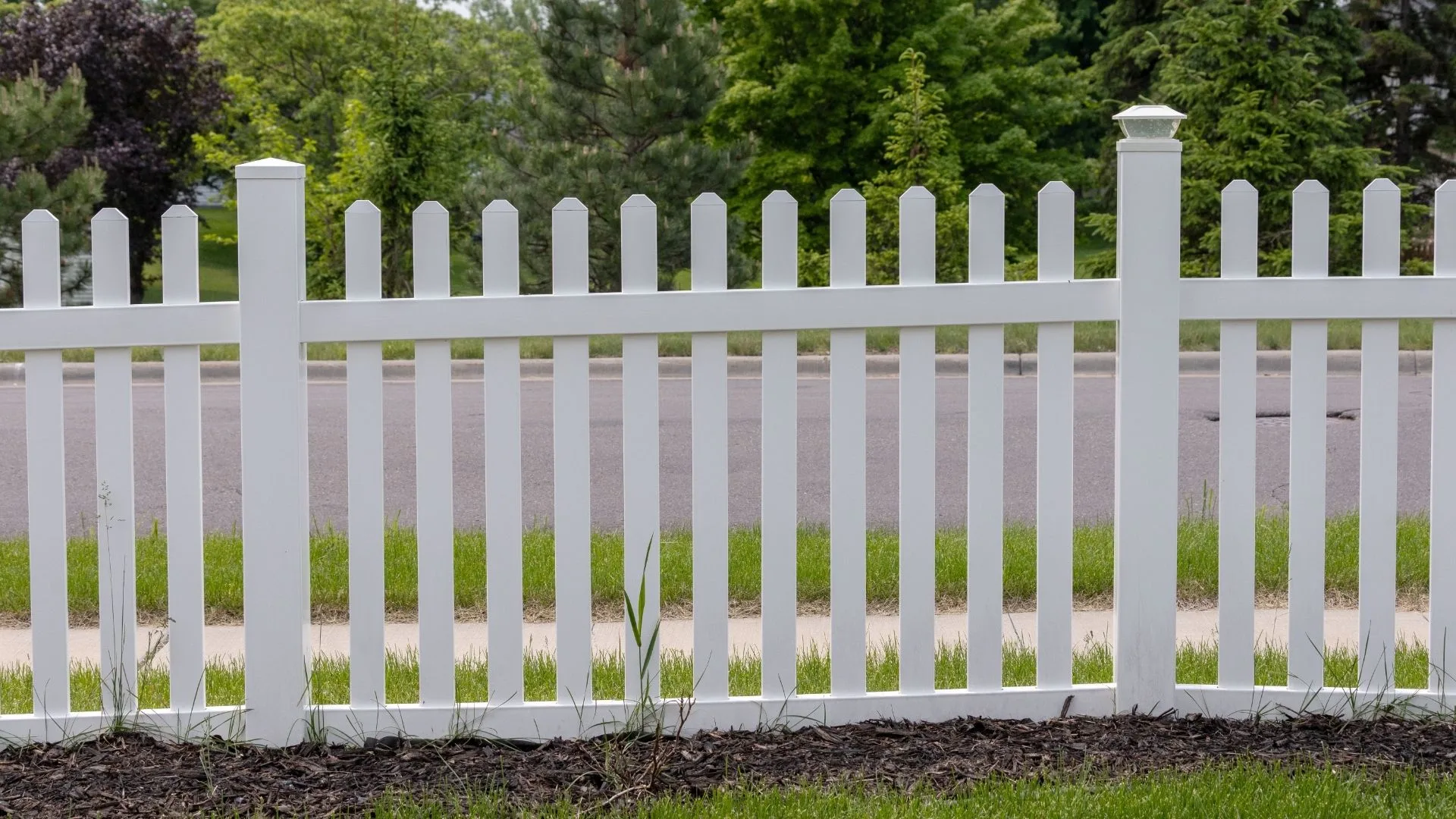
Vinyl fence is the one people assume is a safe pick. It’s clean, and it shrugs off a New England winter without so much as a repaint. But a lot of covenants around here were written by people chasing a “natural” streetscape, and a bright white vinyl privacy wall is the opposite of what they pictured. Some associations restrict vinyl to backyards. Some limit it to specific colors, tan or clay instead of white. A handful ban it out front entirely. If you had your heart set on solid vinyl facing the street, the covenant is where you learn whether that’s a plan or a daydream.
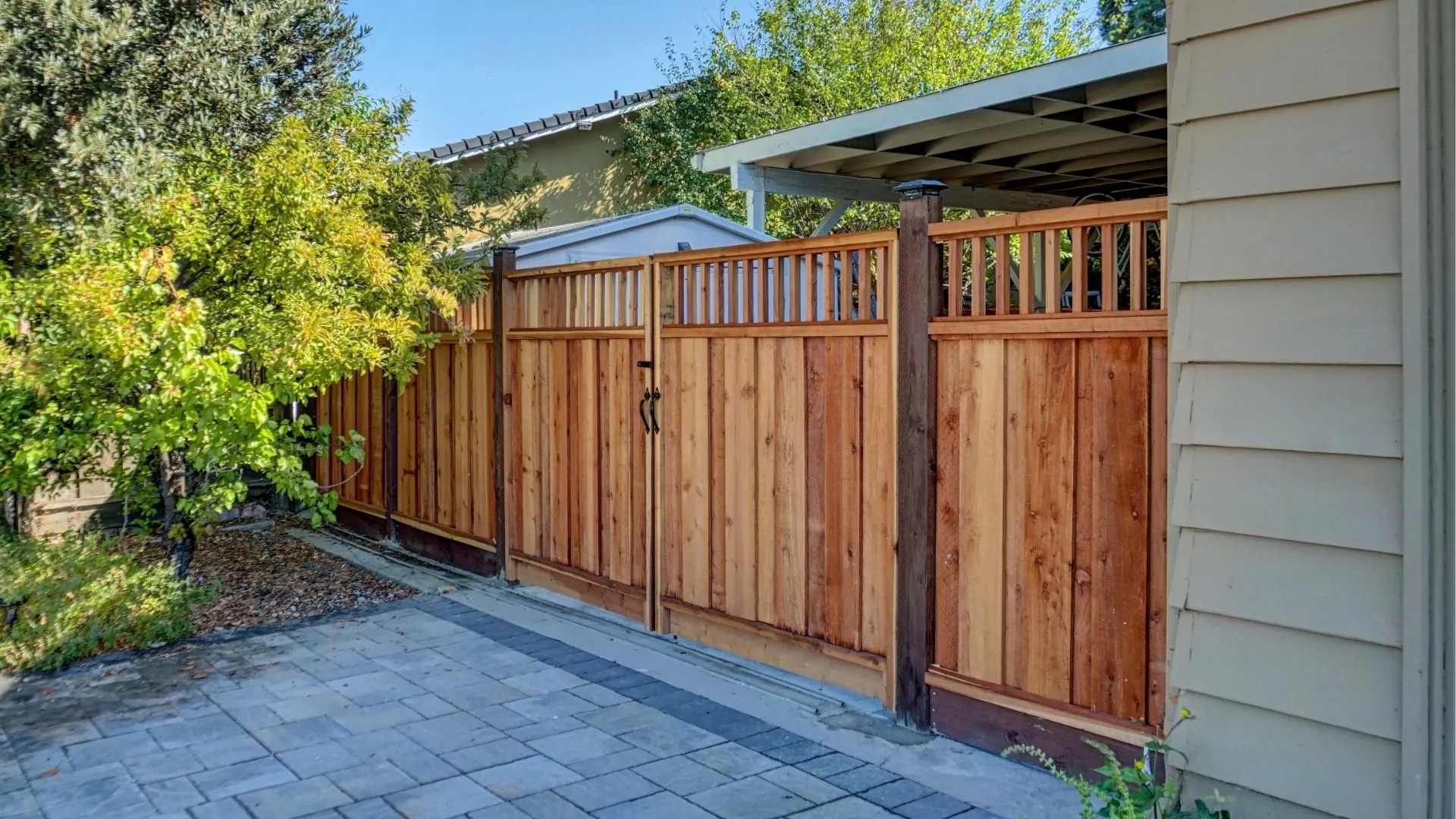
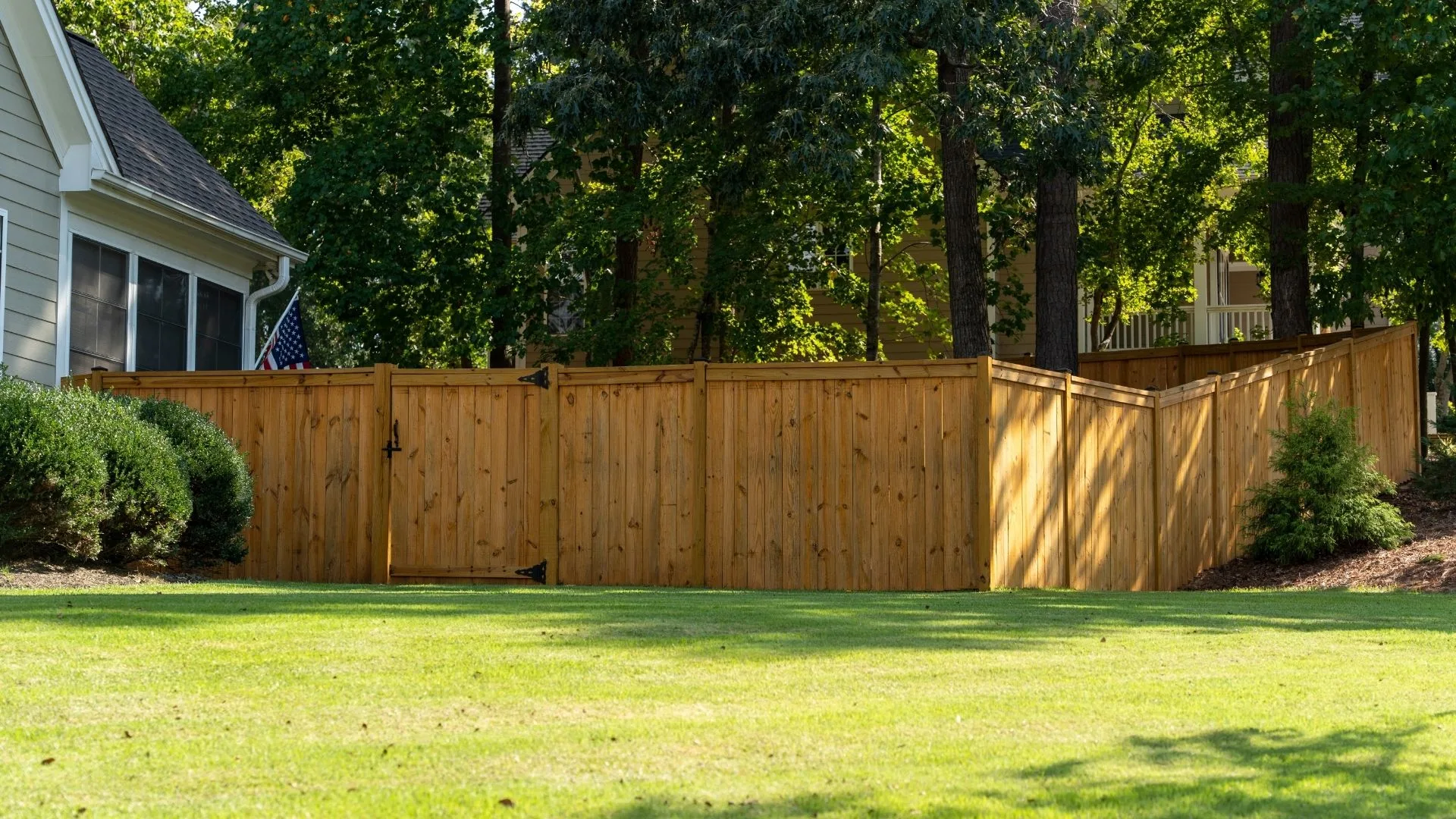
Wood fence cuts the other direction. Wood fences look great on installation day, but they all require regular maintenance to keep up appearances after five or six Stamford winters. A wood fence that gets the initial HOA approval can easily get tagged years down the road for peeling paint or a splintery surface. Appearance covenants don’t expire. If you pick a wood fence, factor in the annual coat of paint or stain (in the approved shade, of course.) Even an unsealed cedar fence that’s allowed to silver naturally needs periodic cleaning and repair to look its best. High-grade materials and a professional install mean longer stretches between touch-ups. The wood fence that still looks approved in year six is the one whose owner kept up their end.
The Order That Saves You the Do-Over
Here’s the sequence that keeps all of this from turning into a story you tell ruefully at a barbecue.
Get your HOA approval before a city permit, not after. The math is simple: the zoning permit is fast and cheap, and the association’s review is the one that can veto your material and your style. Here’s the order of operations to keep the process simple:
Start by digging out your governing documents—the CC&Rs and any architectural guidelines. (Yes, the packet from your closing you swore you’d read someday.) Most associations run submittals through an architectural review committee, and most committees want to see roughly the same things before they’ll sign off:
- A site plan or survey showing where the fence goes. Same survey the city requires, so you’re not doing the work twice.
- The fence type and style—cedar privacy, aluminum picket, vinyl semi-privacy, whatever you’re proposing.
- Color and height, written out plainly, not left to interpretation.
- A spec sheet or a photo so the committee approves what you’re building instead of guessing at it.
Once the committee’s stamp is on paper, then you file for the Stamford zoning permit, then you build. In that order, there’s no version of the story where the fence comes back out of the ground.
Where Superior Fence & Rail Comes In
This is the part of a fence project that has nothing to do with digging holes, and it’s where a great installer earns their keep. At Superior Fence & Rail, the customer service side of a Stamford job means we’re thinking about both gatekeepers from the first conversation—not just what fence you want, but what your association will let you have and what the city will need to see.
In practice, that means helping identify the survey the permit calls for, filling out the zoning paperwork so it’s right the first time, and putting together the material and color specs your architectural committee needs to hand you a clean yes. And every Superior Fence & Rail fence is built on your property, on site—measured and assembled for your yard and your slope, not dropped in as a pre-cut panel kit that ignores both. Because we’ve walked Stamford HOA fence approval with homeowners all over Fairfield County, we tend to spot what would sink a submittal before it gets that far.
If you’re still in the research stage—comparing fence types, wondering whether your front yard can have the fence you want, trying to make sense of a covenant somebody wrote in 1994—that’s a good time to talk to Superior Fence & Rail. Come explore your options with people who handle Stamford HOA fence approval every week, and let’s figure out what your property (and your committee) will allow before anybody starts digging.
About Emma
Emma Butcher is a content writing professional at Urbain Marketing. She specializes in writing content for fence companies and fence installation in local markets.
Get A Fence Quote Today!
Great Fences Make Great Neighbors!
- Best Quality Fences
- Highest Customer Satisfaction Rating
- Fence Financing Options
- Licensed, Bonded & Insured
Your Superior Fence and Rail service team is standing by! Get a fence installation quote today!